Landing in London on a Sunday Night, Starting Monday
Sunday evening is the quietest night of the London week, and it is the one most business trips begin on. What is open, what is not, and why the first night sets the tone for the fortnight.
By KF.Social·7 min read·Published 7th October 2026
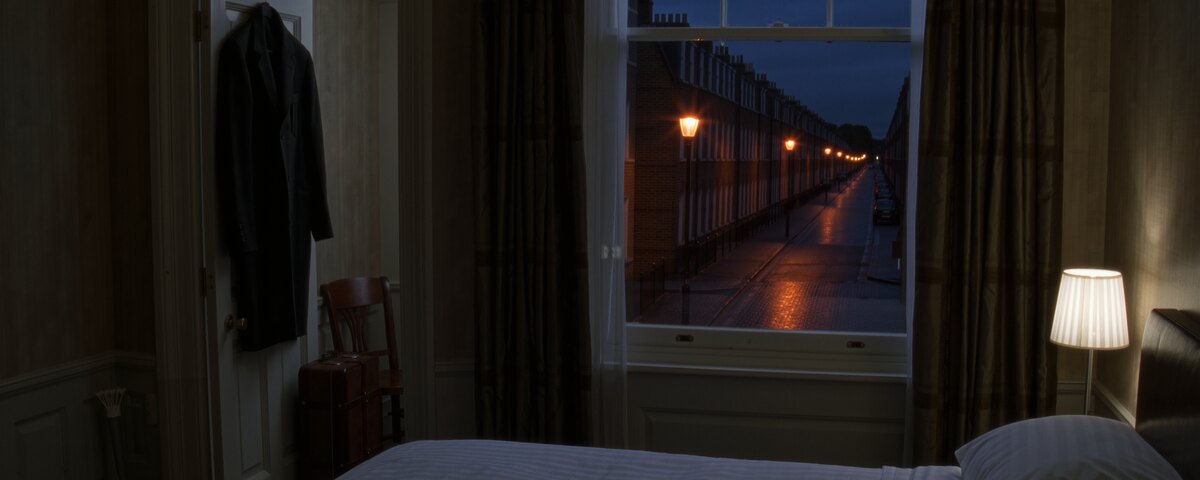
The flight lands late afternoon, the room is ready by six, and by half past seven you are standing on a pavement in a city that has quietly closed for the day. Monday starts at nine. This is the shape of an enormous number of business trips and almost nobody is warned about it.
Here is the short version: Sunday night is the quietest night of the London week, and it is not representative of anything. The city you arrive into bears very little resemblance to the city you will be in on Wednesday. Knowing that before you land changes what you do with the evening, and it stops you drawing a conclusion about the next three weeks from the worst possible sample.
01Why Sunday feels like the wrong city
Several things stack up on the same evening, and none of them are about you.
Kitchens close early. A great many London restaurants either shut on a Sunday evening or take their last orders somewhere between eight and nine. A place that is busy at ten on a Thursday can be locked at half past eight on a Sunday.
Large shops are legally restricted. In England, shops above a certain floor size may trade for only six continuous hours on a Sunday, and most use them in the middle of the day. If you land in the evening needing anything substantial, the big stores are shut and you are down to the small ones.
The Underground runs a Sunday service. It starts later and finishes earlier than a weekday, trains are less frequent, and engineering works land on Sundays more than any other day. The Night Tube does not run on a Sunday night.
The roast is a lunchtime event. If somebody has told you to have a Sunday roast, they meant at two in the afternoon. By eight it is finished nearly everywhere.
So the emptiness you are reading as "there is nothing here" is a Sunday, and it lifts on Monday.
02The real risk of the first night
It is not the boredom. It is the precedent.
What people actually do on a Sunday arrival is order to the room, unpack half the case, and go to bed early because Monday is a big day. Every one of those decisions is sensible on its own. The problem is that the first night is where the pattern for the whole trip gets set, and the pattern you have just set is the room. On Monday you will be tired from the first day. On Tuesday there is a dinner with the team, or there is not. By Thursday the routine is a fact rather than a choice, and changing a routine takes far more energy than starting a different one would have done on day one.
This matters more the longer you are staying. On a three-night trip the room is fine. If you are here for a month, the first evening is the cheapest opportunity you will get, because you still have the small amount of surplus energy that a new place gives you and you have not yet learnt the shortcuts that make staying in easy.
03What to actually do with the Sunday
Eat out, even badly
Go somewhere and sit down. It does not need to be good. The point is not the meal, it is that you have been outside the hotel on the first night, which makes the second night out of the hotel a repeat rather than a decision. Pubs are your friend here, because a pub kitchen on a Sunday evening is one of the few things reliably still serving, and nobody in a pub is going to look twice at one person eating on their own.
Walk the ten minutes around where you are staying
Work out what is on your doorstep while you have no meeting in the morning to be anxious about. You want to know, before Wednesday, where the nearest place that serves food after nine is, where the nearest small supermarket is and when it shuts, and which direction the station is in. Fifteen minutes on a Sunday saves you a bad decision on a Thursday when you are tired and hungry and will settle for whatever is closest.
Do not sort your life out tonight
The temptation on a first evening is to spend it on admin: the expense app, the travel bookings, the messages you owe people. It feels productive and it is a way of not being in the city. It will still be there on Monday.
Put one thing in the diary for midweek
This is the highest-value thing you can do on a Sunday night, and it takes four minutes. Whatever you are going to do to have an evening that is not the hotel, arrange it now, for Tuesday or Wednesday, while you can still be bothered. A booked thing on a specific evening survives a bad day at work. An intention does not.
04If the on-site review starts in the morning
There is a particular version of this that is worth naming, because it is common and it makes the Sunday worse: you are here to examine somebody's operation. An inspection, a compliance review, an audit, a regulatory visit. You will spend the week being polite to people who are guarded around you, because your presence is a thing that is happening to them rather than with them.
That has a social consequence nobody puts in the travel pack. The normal route to an evening on a business trip is the client or the host site: somebody suggests a drink, somebody knows a place. On a review, that route is closed, and closing it is correct. You cannot be taken to dinner by the people you are assessing, and they know it as well as you do. So the week that most needs an evening plan is also the week least likely to be handed one.
Which means the Sunday matters more for you than for the consultant down the corridor. The evenings are not going to arrange themselves later in the week. If they are going to exist, you arrange them.
05A booked table on a weeknight
If the thing you want in the diary is a dinner where the arranging is already done, that is what KF.Social is for. You take a seat at a table of six, on a set night, at a restaurant in London. It is 15 pounds for the seat, which covers the matching rather than the meal, and you pay the restaurant for what you eat and drink like anybody else at the table.
The practical parts, because they matter when your week is not under your control. Dinners run midweek in the evening, which is the part of the week this problem lives in. You find out where about six hours before, and who about an hour before. Booking closes six hours ahead. If your day falls apart, cancelling 72 hours or more ahead puts the 15 pounds back on your card, and inside 72 hours it does not come back. Booking gates on two things and only two: you are 18 or over, and you have paid. Everybody at that table booked their own seat and paid for it exactly as you did, which is the honest answer to who you are sitting with.
The single most useful thing to carry into the first night is that you are seeing London with the lights half off. The pavements fill on Monday, the kitchens stay open, the trains run properly, and the city that felt closed at eight on Sunday is busy at ten on Tuesday.
Do not decide anything about the trip tonight. Just get out of the room once, find out what is within ten minutes of you, and book one evening for the middle of the week.
Related Questions
Is London dead on a Sunday night?
It is much quieter than any other night of the week, and it is not representative. Many kitchens take last orders between eight and nine, large shops are limited to six hours of Sunday trading in England, and the Underground runs a reduced Sunday service with no Night Tube. By Monday evening the city is busy again, so do not judge a trip on the night you land.
Where can I eat on a Sunday evening in London if I arrive late?
Pubs are the most reliable option, because a pub kitchen is one of the few things still serving on a Sunday evening, and nobody looks twice at one person eating alone in one. If you want a Sunday roast, note that it is a lunchtime thing and is usually finished by early evening.
What should I do on the first night of a long business trip?
Get out of the hotel once, even for a mediocre meal, because the first night sets the pattern for the rest of the trip and the pattern is very hard to change later. Walk the ten minutes around where you are staying so you know where food and a shop are. Then put one specific thing in the diary for the Tuesday or Wednesday while you still have the energy to arrange it.
Why is it harder to get an evening plan when you are there to audit or inspect?
Because the usual route to an evening on a business trip is the host site, and that route is properly closed to you. You cannot be taken to dinner by people you are assessing. So the week that most needs a plan is the week least likely to be given one, and any evening you get is one you arranged yourself.
 KF.Social