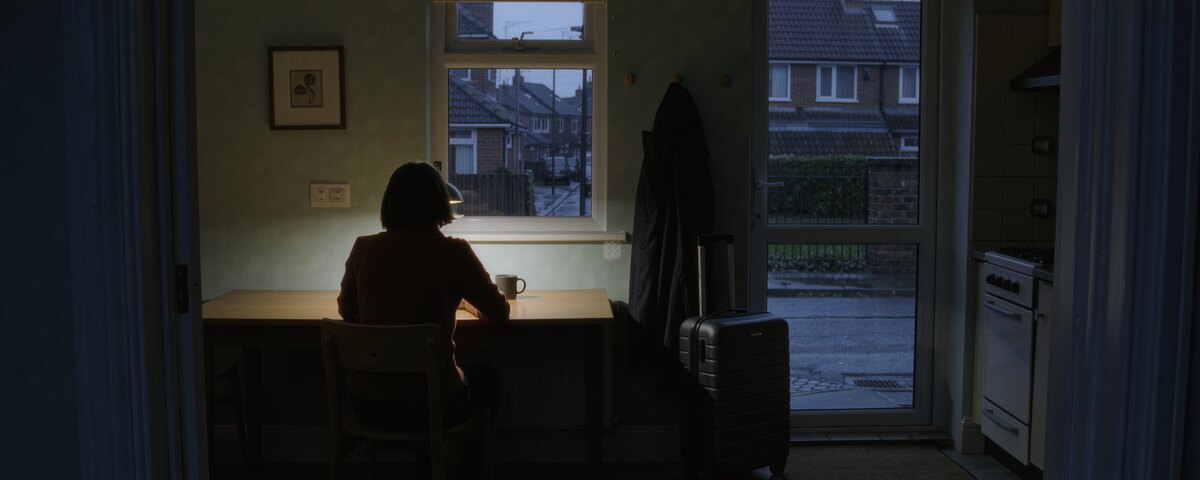
You are flying over on a Monday or a Tuesday, and back on the Thursday, and you will be doing it for the next several months. Nobody has called it a relocation. It does not feel like one. The flight is about an hour, your phone works, the language is the same, and you can be home by Thursday night if you want to be.
Which is exactly why this one catches people out. The trips that are easy to make are the ones nobody prepares for, and the lack of preparation is what turns a straightforward arrangement into six months of hotel evenings.
01The specific trap of a short hop
Somebody moving to London from Mumbai or Seoul knows they have moved. They pack accordingly, they expect it to be hard for a while, and they make some deliberate effort to build something, because the alternative is obviously unbearable.
Coming from Dublin or Cork, none of that machinery switches on. You are not moving. You are travelling for work, and you will be home at the weekend, and the whole thing is temporary. So you do not unpack properly, you do not join anything, you do not make a plan for a Wednesday night, and you say no to things on the grounds that you are going home on Thursday anyway.
Then you look up in March and realise you have been doing three or four nights a week in a London hotel since October. That is more nights away than a lot of people do on a formal posting. You just never accounted for them, because each individual week was short.
02The weekend commute is the thing to think hardest about
Because home is genuinely reachable, you end up carrying an option that people on longer postings do not have, and an option you can always exercise is a decision you never actually make.
The pattern that causes trouble is the one where you keep the weekend as the real part of your life and treat everything between Monday and Thursday as something to be endured. It holds up for a few weeks. What erodes it is that you never build anything in London, so the weeknights get progressively emptier, and the tiredness of the flights lands on the weekend, which is the part you were protecting.
The thing worth deciding early, and honestly: are you commuting or are you staying? Both work. What does not work is the unexamined middle, where you are physically here for most of the week and mentally here for none of it. Six months of that is genuinely draining and it is very hard to see from inside because nothing about it looks unreasonable week to week.
03Before the first week: the useful practical bits
- Photo ID, whatever the border arrangement. Travel between Ireland and the UK does not put you through the usual passport control, but airlines set their own identification requirements and they are not all the same. Check what yours asks for rather than assuming, particularly if you were planning to travel on a driving licence.
- Check roaming rather than assuming it. Do not find out at the airport. Mobile arrangements between Ireland and the UK vary by provider and by plan, and a surprise here is both expensive and, on the first Monday, genuinely inconvenient.
- Contactless on the Underground, and mind the card. You tap in and out with a bank card or a phone. Use the same one every time, because tapping in with one and out with another produces the maximum fare on both. Watch what your bank charges for a foreign card if you are using an Irish one.
- Get the accommodation question right early. If this is going to be three or four nights a week for months, a hotel room is the worst version of it. An aparthotel or a serviced flat with a kitchen and somewhere to sit that is not the bed changes the evenings considerably, and it is usually cheaper on a long booking.
- Look at where you will actually be. London is large and the difference between a fifteen minute walk to the office and a fifty minute commute at either end of a long day is the difference between having evenings and not having them.
04The thing that surprises people from Ireland specifically
It is not culture shock. There is very little of that, and expecting some is part of what leaves people unprepared.
It is scale, and what scale does to spontaneity. In a smaller city you can operate on short notice: people are twenty minutes away, you run into people, an evening assembles itself. London does not do that. Everybody is forty minutes from everybody, plans are made a fortnight out, and nothing assembles itself at all. People are perfectly friendly and nothing whatsoever happens by accident.
So the social habits that have always worked for you stop producing results, and the natural reading is that London is cold or that something is wrong with you. Neither is right. The city runs on things that are arranged in advance, and once you know that, you arrange things in advance.
The second one, quieter: you have nothing to explain. Someone arriving from further away gets asked where they are from and how they are finding it, and those questions, tedious as they are, are a conversation. You do not get them. You are unremarkable here, which is comfortable and also means nobody opens the door for you.
05What to put in the diary
One fixed thing, midweek, in the first fortnight. It matters that it is fixed and that it is midweek, because those are the nights that are actually empty, and because a standing arrangement survives a bad day whereas a vague intention does not.
A booked dinner is one straightforward way to do it. KF.Social seats you at a table of six at a London restaurant on a set evening. The seat costs 15 pounds, which pays for the matching and not for the meal, and you pay the restaurant for your own food and drink.
The details that matter to somebody flying back on Thursday: dinners are midweek evenings, booking closes six hours before, the restaurant lands about six hours before and the table about an hour before. If the week changes, and on this kind of arrangement it does, cancelling 72 hours or more ahead returns the 15 pounds to your card, and inside 72 hours it does not come back. Booking gates on two things only: being 18 or over, and having paid. Everybody at the table booked and paid for their own seat exactly as you did.
See what is running in London and put one in for a Tuesday or a Wednesday in your first fortnight, while it is still easy to be bothered.
06The short version
The ease of the journey is not the same thing as the ease of the arrangement. An hour's flight and no paperwork means nobody warns you, least of all yourself. Decide whether you are commuting or staying, sort the accommodation properly if it is going to run for months, and arrange one midweek evening early, because in this city nothing arranges itself.
 KF.Social