The Week Before a Business Trip to London: What to Sort Now
A business trip to London gets planned around the days. Here is what to sort for the evenings before you fly, while you still have the time and the will to do it.
By KF.Social·5 min read·Published 5th September 2026
Your days are already full. Someone has built an agenda, booked the rooms and told you who you are meeting on Tuesday. Your evenings have had no such attention, and they will not get any, because from the company's point of view the evenings are not a problem that exists.
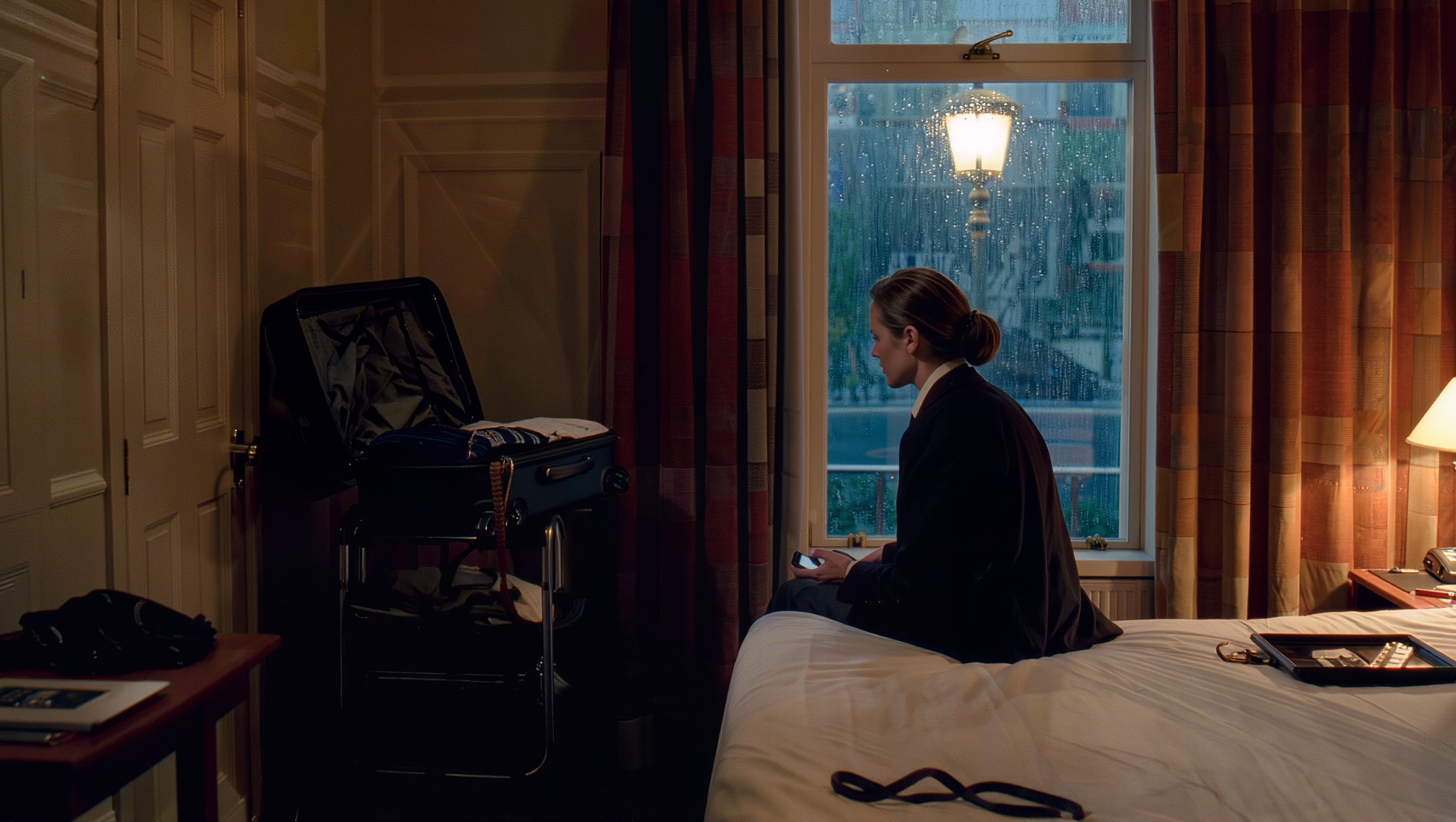
This is written for the week before you fly, while you are still at your own desk and still have the will to arrange things. That will does not survive the flight. This is the honest reason to do it now rather than a productivity flourish: on the Tuesday of a trip, at seven in the evening, in a hotel room, having been talking to people since eight in the morning, nobody arranges anything. They order food and open a laptop. If the evening was not decided in advance it defaults to that, every time.
01Pick where you stay on the ten minute walk, not the hotel
This is the single decision with the most effect on the trip and it is usually made on the wrong criteria. The hotel itself matters very little. You will be in the room to sleep and to answer email. What matters is what is within a ten minute walk of the front door at seven in the evening, because ten minutes is roughly the distance a tired person will actually go.
Some rough shapes, and they are worth checking against wherever your client actually is:
The City and Canary Wharf are the classic trap. Superb during the day and genuinely quiet after about eight, because almost everyone there has gone home. If your office is in either, consider staying somewhere else and commuting in, which is the opposite of what most people book.
Borough, Bermondsey and Southwark put you next to the river, several markets and a lot of small restaurants, and are still ten or fifteen minutes from the City.
Clerkenwell and Farringdon are walkable to the City, busy in the evening, and well connected.
Shoreditch and Spitalfields stay busy late, which suits some people and is exactly wrong for others.
Paddington, Victoria and Kings Cross are excellent for getting places and poor for standing outside your hotel wondering what to do.
If you are staying more than about ten nights, look at an aparthotel rather than a hotel. Having a kitchen changes the evenings considerably, not because you will cook elaborately but because the alternative to going out stops being room service.
02Put something in the diary for the second week, not the first
The first week of a trip looks after itself. Everything is new, the admin fills the gaps, there is usually a team dinner, and you go to bed tired thinking this is fine.
The second week is the one that gets long. The novelty has gone, the commute is automatic, and a Tuesday arrives with nothing in it. That is the evening to have decided about in advance, and it is the one nobody plans for, because when you are booking the trip the second week feels a long way off and you assume you will have sorted something by then.
So put one thing in the second week before you fly. One is enough. It does not have to be sociable. A concert, a talk, a match, a booked table. The point is that it exists, and that on the day you are following through on a decision made by a rested version of you rather than making a decision as a tired one.
03Three things worth booking from where you are now
Anything with tickets. Theatre, gigs, football, comedy. These sell out, and they are much easier to book on a laptop with time than on a phone at seven in the evening.
Anything that needs a table. The good small restaurants in London take bookings weeks ahead and walking in on a Thursday does not work as well as people expect.
Anything with other people in it. This is the one that gets left, because it feels like the sort of thing you will sort out when you are there. You will not. Nobody does.
04The part that is worth saying plainly
If this is a repeat trip, and for a lot of people covering a region it is, you already know how it goes. The days are good. The work is interesting and the people are fine. The evenings are the part that quietly wears, and after a few trips the city itself starts to feel like a place you have never actually been to, because you have seen the office, the hotel and the route between them.
That is not a personal failing and it does not mean you are bad at travelling. It is what happens when every hour that was structured for you was structured around work. The fix is not to try harder at seven in the evening. It is to make a smaller number of decisions a week earlier.
05What we do, in one paragraph
KF.Social books you a seat at a table of six in a London restaurant, on a set evening, with other people who are also in London for work. It is 15 pounds for the seat, shown before you pay, and your food and drinks at the restaurant. The restaurant lands about six hours before, and who you are sitting with about an hour before, which is when the group chat opens. Booking is open to anyone over 18 who pays. If your plans change, and on this kind of trip they do, cancelling more than 72 hours ahead puts the 15 pounds back on your card, between 72 and 24 hours it comes back as KF Points, and inside 24 hours it does not come back.
We only run in London, which is a real limitation and worth knowing before you look. If your trip is to London, the tables coming up are here, and booking one now is exactly the kind of second-week decision this page is about.
Related Questions
How far ahead should I plan the evenings on a business trip to London?
Before you fly, while you are still at your own desk. The specific problem is that nobody arranges anything at seven in the evening after a full day of meetings, so an evening that was not decided in advance defaults to room service and a laptop.
Where is the best place to stay in London for the evenings?
Judge the location on what is within a ten minute walk at seven in the evening rather than on the hotel. The City and Canary Wharf are excellent by day and quiet after eight because everybody leaves. Borough, Bermondsey, Clerkenwell and Farringdon keep you near the City with more open in the evening.
Hotel or aparthotel for a long stay?
If the stay is longer than about ten nights, an aparthotel is usually the better call. The kitchen matters less for cooking than for the fact that the alternative to going out stops being room service.
Which week of a trip is hardest?
Usually the second, not the first. The first week is filled by novelty and admin and there is often a team dinner. By the second the commute is automatic and a weekday evening arrives genuinely empty, which is why that is the week to put something in the diary for.
What does KF.Social cost?
15 pounds for the seat, shown before you pay, plus your food and drinks at the restaurant. There is no subscription needed to book. It runs in London only.
 KF.Social