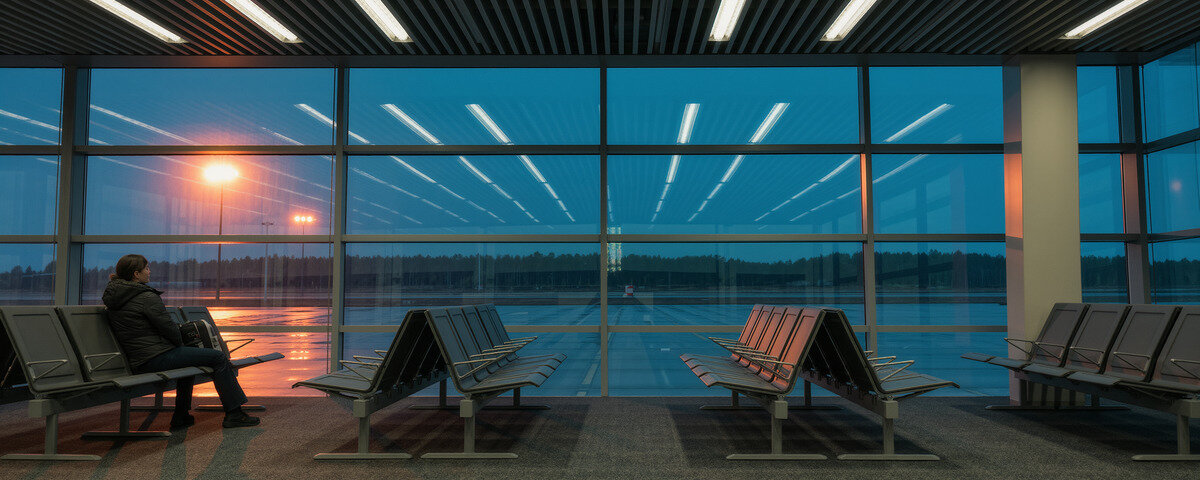
A business trip or rotation to London from Norway: the ETA, plugs, why dinner runs two or three hours later, and what to do when colleagues go home at six.
By KF.Social·5 min read·Published 21st October 2026
You are coming through the London office for a few weeks: a rotation, a project phase, a commercial stretch, a handover. From Oslo it is about two hours in the air, and there are direct flights from Bergen and Stavanger too. London is one hour behind Norway all year, because both change their clocks on the same dates.
Nearly everything practical will feel easy. What takes adjusting is the shape of the day, which starts later, eats later and ends in a pub, and the evenings when the office has gone home and you have not.
01Before you fly: the things worth ten minutes now
Get the ETA. Norwegian citizens visiting the UK without a visa now need an Electronic Travel Authorisation before they travel. It is applied for online and linked to your passport. If the rotation involves more than office work and meetings, ask your employer's travel or mobility team which permission the work needs, because that is a question about your activity.
Payments will feel familiar. London is close to cashless, like home. Card and phone payments work nearly everywhere, and on the Underground and buses you tap a contactless card or phone on the reader. Use the same card to tap in and out every time. Check what your bank charges for payments in pounds.
Plugs. The UK uses its own three pin plug, and your Norwegian ones will not fit. Bring two adapters.
Look at where you are sleeping relative to the office. A hotel next to the office is convenient in the morning and can be very quiet at night if the office is in a business district that empties after six. A twenty minute ride into a livelier area is often a better trade for a stay of several weeks.
Put one thing in the diary before you land. The rotation that starts with an empty evening calendar is the one where you eat in the hotel every night.
02Dinner is later, and the evening starts in a pub
If you are used to a Norwegian weekday, with dinner at home around five and the evening free after it, London will feel shifted by two or three hours. Meetings run later, people leave the office later, and restaurants are busiest from about half seven. Eating at five is possible, but you will often be the only table.
Between the office and dinner there is the pub. A lot of British working social life happens there straight after work: standing, unplanned, rounds bought at the bar. It is a real way in and worth going to a few times, even if it is louder and faster than you would choose. Buying alcohol is also simpler than at home: wine and beer are sold in ordinary supermarkets and corner shops.
In restaurants, a service charge, commonly 12.5 percent, is often added to the bill automatically. It is discretionary, so read the bill before adding a tip on top.
03When colleagues go home and you do not
This is the part of a London rotation that nobody warns you about. Your London colleagues may be excellent company all day, and then at six they leave for a train, a family and a life that does not include you. It is not personal, and it does not change. After a week or ten days of it, most people notice they have not had a proper conversation outside work since they landed.
The fix is not to wait for an invitation. It is to have something of your own in the week that does not depend on anyone else's evening.
04The evenings, concretely
Decide before you fly that the first fortnight has one fixed thing in it, midweek. Fixed, because a standing arrangement survives a long day. Midweek, because Tuesday and Wednesday are the evenings that stay empty.
A booked dinner is one straightforward way to do it. KF.Social seats you at a table of six at a London restaurant on a set evening. KF.Social runs tables of six in London on weeknight evenings, sitting at 19:00, and the London page lists the dates on sale with the night and the area for each. The seat costs 15 pounds, which pays for the matching and not for the meal, and you pay the restaurant for your own food and drink. Everything is in English, and the conversation is a table of six taking turns rather than a crowded bar.
The timings, because they matter when your week is not your own: booking closes six hours before, the restaurant lands about six hours before, and who you are sitting with about an hour before, when the group chat opens. If the week changes, cancelling 72 hours or more ahead returns the 15 pounds to your card, and inside 72 hours it does not come back. If the table does not run, everyone is refunded in full whatever the clock says. Booking gates on two things only: being 18 or over, and having paid. Everybody at the table booked and paid for their own seat exactly as you did.
Get the ETA, bring plug adapters, and expect the payments to feel like home. Expect the day to run two or three hours later than a Norwegian one, and the socialising to start in a pub. Do not wait for London colleagues to fill your evenings, because they have their own. Put one fixed midweek evening in the diary for the first fortnight before you fly.
Related Questions
Do Norwegians need an ETA to visit the UK?
Yes. Norwegian citizens visiting the UK without a visa need an Electronic Travel Authorisation, applied for online before travel. Whether your work is allowed as a visit depends on what you will be doing, so ask your employer's travel or mobility team if the rotation involves more than office work and meetings.
What is the time difference between Norway and London?
London is one hour behind Norway. Both countries change their clocks on the same dates, so the difference stays at one hour all year.
What time do people eat dinner in London?
Later than a typical Norwegian weekday. Restaurants are busiest from about half past seven, and many people go to a pub straight after work first. You can eat earlier, but expect a quiet room before about half six.
Is London cashless like Norway?
Very nearly. Card and phone payments are accepted almost everywhere, and public transport works by tapping a contactless card or phone. Use the same card to tap in and out each time, and check what your bank charges for payments in pounds.
What can I do in the evenings on a rotation through London?
Go to the after-work pub a few times, get out of the business district at least twice a week, and put one fixed midweek plan in the diary that does not depend on colleagues. A standing arrangement survives long days much better than a vague plan to go out.
 KF.Social