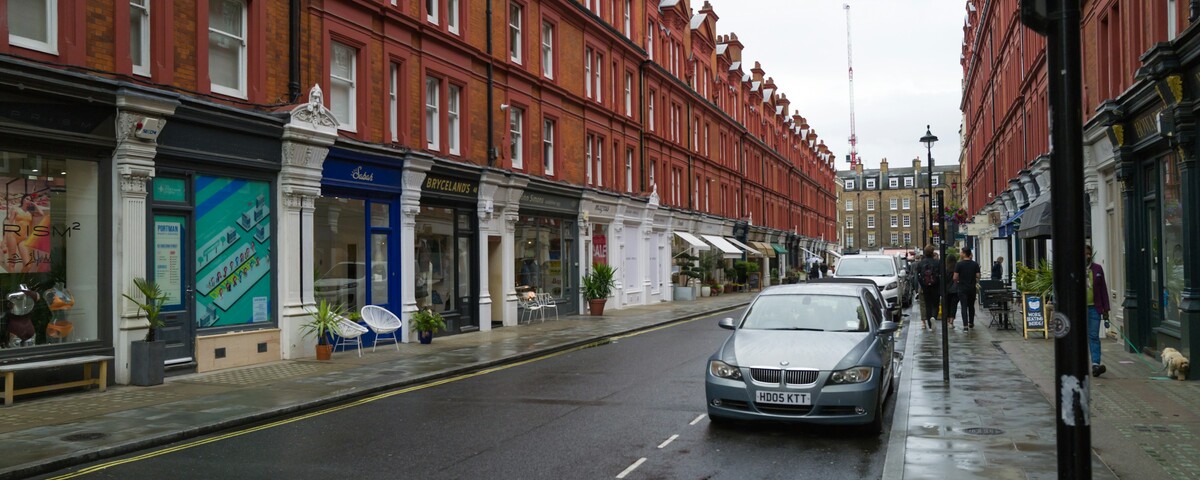
How to ask a local question without feeling like a burden. Why people like being asked, how to ask well, and why a question is an easy way to start knowing someone.
The questions that matter when you arrive somewhere are the ones a search engine answers badly. Which practice actually takes new patients. Whether that price is normal. Where you buy the ingredient nothing else substitutes for. Whether that street is fine to walk down at night. All of these have answers, and the answers are held by people rather than by websites.
01People like being asked
The fear is that a question makes you a burden. In practice, being asked a local question is a small pleasure for the person answering, because it puts them briefly in the position of the expert, and because knowing a place well is one of the few pieces of status available to a long-term resident. A question that takes thirty seconds to answer is not an imposition, it is an invitation to be useful.
There is also a well-documented oddity of human behaviour, sometimes called the Ben Franklin effect: doing someone a small favour tends to make the helper warmer towards the person they helped, not the other way round. Asking for a small thing is closer to an overture than a cost.
02How to ask well
Ask something specific and answerable. Which pharmacy is open late near the station, rather than any tips for the area. Broad questions require the other person to write an essay, which is why they go unanswered.
Ask the person most likely to know. Local questions belong to local people. The person behind the counter at the place you use, someone in a residents' group, the person you always see at the same class. Asking generally gets general answers.
Keep it to one question. A list of six reads like work. One question gets an answer, and the answer usually opens the door to the next one anyway.
Say why, in half a sentence. I just moved here and cannot work out where to register. Context makes a stranger's question legible, and it explains why you do not already know.
Accept the answer you get. Even if it is not quite right. Arguing with a favour is the fastest way to not get a second one.
Do not apologise twice. One light acknowledgement is fine. Repeated apologising makes a small request feel like a large one and puts the other person in the position of reassuring you.
03Where to put the question
In person, the easiest targets are people already in a service role or already talking: shop staff, the person next to you in a queue, someone at the thing you have started attending. Online, local groups and area forums exist substantially for this purpose, and the questions that get the best answers there are the narrow, practical ones with a place name in them.
One thing worth saying plainly: a question posted in a local group will often get several conflicting answers. That is still useful. Three contradictory recommendations tell you the choice is not important, which is itself the answer.
04The part that turns it into knowing someone
Here is the step almost everyone skips. Go back afterwards and say what happened. You registered at the practice they mentioned, you found the shop, the price was about what they said.
That report is the second contact, and second contacts are the entire mechanism by which strangers become people you know. It requires no invitation, no plan and no vulnerability. It also makes the next question natural, because you now have a small shared history consisting of one piece of successful advice.
Do that three or four times with the same person and you are no longer someone who asked them a question. You are someone they know, which is exactly the position that a coffee or a walk eventually comes out of.
05What not to do
Do not ask what a search answers instantly. Opening hours and postcodes waste the goodwill you want for the questions that need a human.
Do not turn the question into a story about yourself. A short question gets a fast answer. A paragraph of background gets skipped.
Do not ask for a favour when you mean a question. Where do people buy this is a question. Could you take me there is a favour, and the two have very different costs.
Do not stop at one. A single question is a transaction. A slow sequence of them, spread over weeks, with the results reported back, is how you end up with people.
Related Questions
How do I ask for help in a new city without feeling like a burden?
Keep the question specific, answerable in about thirty seconds, and limited to one thing. Say in half a sentence why you are asking, so the question is legible from a stranger. Apologise once at most, because repeated apologising makes a small request feel large and puts the other person in the position of reassuring you.
Why do people like being asked local questions?
Because it briefly puts them in the position of the expert, and knowing a place well is one of the few pieces of status available to a long-term resident. There is also the Ben Franklin effect: doing someone a small favour tends to make the helper warmer towards the person they helped, so asking is closer to an overture than a cost.
Where should I ask local questions?
Ask the people most likely to know. In person, that means shop staff, someone in a queue, or people at something you have started attending. Online, local area groups exist substantially for this, and narrow practical questions with a place name in them get the best answers. Conflicting answers are still useful: they tell you the choice does not matter much.
How does asking a question turn into knowing someone?
By going back afterwards and reporting what happened. That second contact is the mechanism by which strangers become people you know, and it requires no invitation and no plan. Do it three or four times with the same person and you have a small shared history, which is what a coffee or a walk eventually comes out of.
 KF.Social