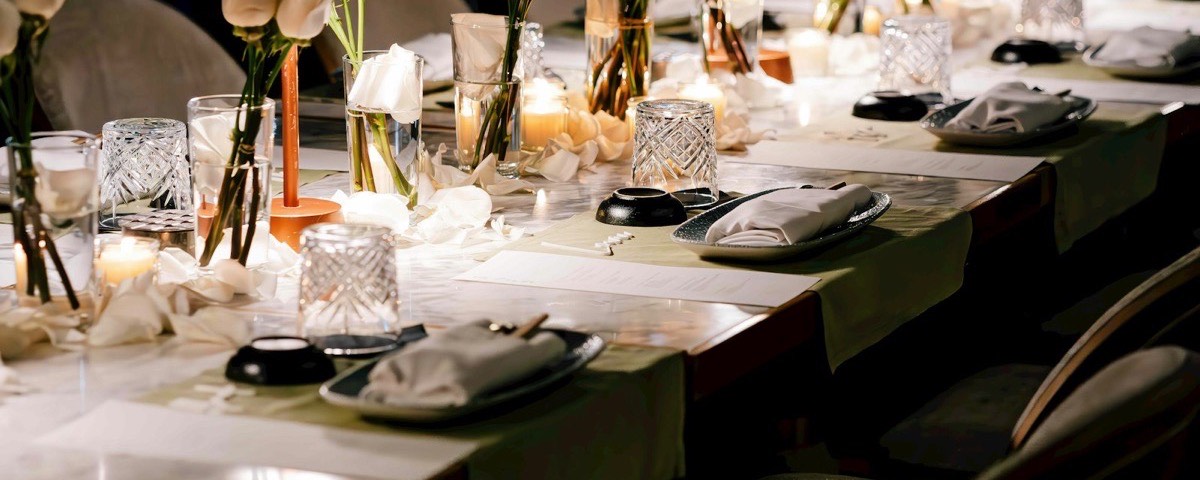
You enjoy getting to know someone properly, but a whole table talking at once sounds less appealing. That does not mean a group dinner is automatically wrong for you. It means the decision should depend on what the evening actually offers: shared conversation, with possible smaller exchanges, rather than guaranteed time alone with every guest.
01Decide what you want from this particular evening
There is a difference between wanting to meet several new people and wanting an uninterrupted catch-up with one person. A social dinner can offer the first. It cannot reliably offer the second, even when the group is small. If you have had a demanding week and want familiar company without introductions, asking an existing friend for coffee may be a better plan.
You do not need to turn a preference into a personality test. Think about a recent meal you enjoyed: was it the people, the quieter setting, the time available or the chance to follow one subject? Those details are more useful than deciding whether you are sufficiently outgoing.
02Check the arrangement rather than guessing from the group size
Before booking, look for the expected number of guests, the meal format and any information about the venue. A small table is not necessarily a quiet table. Music, nearby diners, the table shape and the way people participate can all affect whether following the conversation feels comfortable.
If hearing people clearly or a particular seating arrangement is essential, ask about that requirement before paying. Do not assume a promotional photograph confirms the venue or that an organiser can guarantee a quiet corner. A clear unanswered requirement is a reason to get more information, not to hope the photograph is representative.
03Start with one exchange without closing off the table
On arrival, it is reasonable to introduce yourself to the person beside you. A simple question about their journey or what brought them to the dinner gives you somewhere to start. You do not have to address everyone at once or prepare an entertaining introduction.
As the meal gets underway, leave space for that exchange to become shared. Turn towards the table when someone joins in, briefly explain the subject and avoid keeping a private conversation going over somebody else's contribution. For example: “We were talking about places to walk at the weekend. Have you found any you like?” That offers an opening without requiring everyone to answer in turn.
04Follow a subject, not a list of interview questions
If somebody mentions an interest, you can ask one follow-up and share something relevant yourself. “What got you into that?” can open a topic, but repeated questions without offering anything back can make the other person feel interviewed. Conversation can move between people and subjects without every thread being completed.
You are allowed to listen and take pauses while eating. You are also allowed to contribute a short thought rather than a full story. Neither speaking the most nor having a separate conversation with every person needs to be the measure of a successful evening.
05Do not promise yourself a quieter second half
The table might split naturally into smaller conversations, or it might stay together throughout the meal. Guests may leave afterwards rather than continue elsewhere. Book only if the shared dinner itself seems worthwhile; a possible walk, drink or follow-up is not part of the experience unless the organiser explicitly says so.
If you connect with someone, ask whether they would like to keep in touch. A later coffee can provide the one-to-one setting you prefer, but it needs their agreement. See our guide to making a clear friendship invitation rather than assuming exchanging details is a commitment.
A recurring activity group may suit you if doing something alongside people makes introductions easier. A catch-up with one friend may suit you if depth and uninterrupted time matter most today. Our dinner-club suitability checklist also covers practical costs and arrangements.
If meeting five new people over a shared meal appeals, check KF.Social's available London dinner. Tables have six people. The booking fee is £15; food, drinks and travel cost extra. It is a group dinner, not a promise of one-to-one matching, particular conversation dynamics or a future friendship. Choose it for an evening you want to attend, not because you need to change how you prefer to socialise.
 KF.Social