KF.Social
 KF.Social Editorial
Almost every beginner makes the same mistake: they add weight as fast as their pride allows and treat the empty bar as an insult. But a heavy lift is not a separate skill from a light one. It is the same movement pattern under more load, and if the pattern is sloppy, adding weight just makes the sloppiness heavier. The lifters who stay healthy and strong for decades are the ones who earned the right to load the bar by first making the movement automatic.
The short version
- A lift is a motor skill, like a golf swing. Your brain has to build the movement pattern before it can perform it well under heavy load.
- Practising with a light or empty bar lets you do **many clean reps without fatigue burying your form**, which is exactly how skills get wired in.
- Load magnifies whatever pattern you already have. Add weight to a good pattern and you get stronger. Add it to a bad pattern and you groove the flaw and raise the injury risk.
- You are not 'wasting' sessions. Early strength gains come mostly from your nervous system learning the lift, not from bigger muscles.
- Master the bar, then add weight in small steps only while form holds. When form breaks, you have found your ceiling for now.
A lift is a skill, not just an effort
We tend to picture strength training as pure effort: grab the weight, strain, done. But a squat, a deadlift, or a bench press is a coordinated movement with dozens of moving parts. Your feet, hips, spine, shoulders, and grip all have to do the right thing in the right order. That coordination is a motor skill, and like any skill, it has to be learned and rehearsed before it becomes reliable.
Think about learning to drive, or a tennis serve, or handwriting. At first every part demands conscious attention and the result is clumsy. With enough correct repetition, the movement becomes automatic and you stop thinking about the parts. Barbell lifts are exactly the same. The empty bar is not a lighter workout. It is the driving lesson before the motorway.
You cannot skip the skill-building phase by loading the bar. Heavy weight does not teach the movement; it only tests a movement you already own. Build the pattern first, under a load light enough that you can think clearly.
Why a light bar teaches better than a heavy one
Skills are built through many correct repetitions. That is the whole trick. And a light bar is the only load that lets you do many correct repetitions, for two reasons.
First, fatigue is the enemy of learning. A near-maximal set leaves you two or three reps before your form falls apart. A light set lets you do ten clean reps where every one reinforces the right pattern. You get far more quality practice per session with light weight than with heavy.
Second, a heavy load hijacks your attention. When the bar is scary, your brain switches from 'move well' to 'survive this rep', and survival mode is not learning mode. With a light bar you have the spare attention to feel your feet, fix your back angle, and actually notice what you are doing. That noticing is how a pattern gets refined.
Treat early sessions as practice, not testing. A practice session succeeds when the reps looked good, not when the number was big. Getting this distinction right in month one is worth years of progress later.
Load magnifies whatever pattern you own
Here is the mechanism that makes this matter for your body, not just your progress. Weight does not fix a movement. It amplifies it.
If your knees cave and your back rounds under a light squat, those same faults appear under a heavy one, only now with far more force running through the exact tissues least able to handle it. And because every rep grooves the pattern deeper, adding weight to a flawed lift does something genuinely counterproductive: it makes the flaw stronger and more automatic, while raising the stress on the joints and spine that the flaw exposes.
| What you do | What happens to skill | What happens to injury risk |
|---|---|---|
| Add weight to a clean pattern | The good pattern gets stronger and more automatic | Stays low, load is shared correctly |
| Add weight to a flawed pattern | The flaw gets grooved deeper and harder to unlearn | Rises, force loads the weakest link |
| Master the pattern light, then load | Skill leads, strength follows | Lowest, you only load what you can control |
A movement fault you have grooved under heavy weight for months is far harder to fix than one caught in the first week with a light bar. The cheapest time to fix your technique is before you have practised it wrong a thousand times.
You are not wasting those sessions
The strongest reason not to rush is that the early weeks are already doing the most important work, even if the bar stays light. When beginners get rapidly stronger, most of that gain in the first weeks comes from the nervous system learning to perform and coordinate the lift, not from muscles getting bigger.
In other words, the light-bar phase is the strength-building phase. You are teaching your body to recruit the right muscles, in the right order, with the right bracing. That neural learning is precisely what lets the weight climb quickly once you do start loading it. Skipping it to chase early numbers trades a durable foundation for a few flattering sessions.
The empty bar is not the price of admission to the real workout. It is the fastest, safest way to build the skill that makes every future kilo possible. Beginners who embrace this get stronger faster overall, not slower.
How to master the bar, then add weight
This is not a call to lift the empty bar for a year. It is a call to earn each jump in weight with a solid movement. Here is a practical progression.
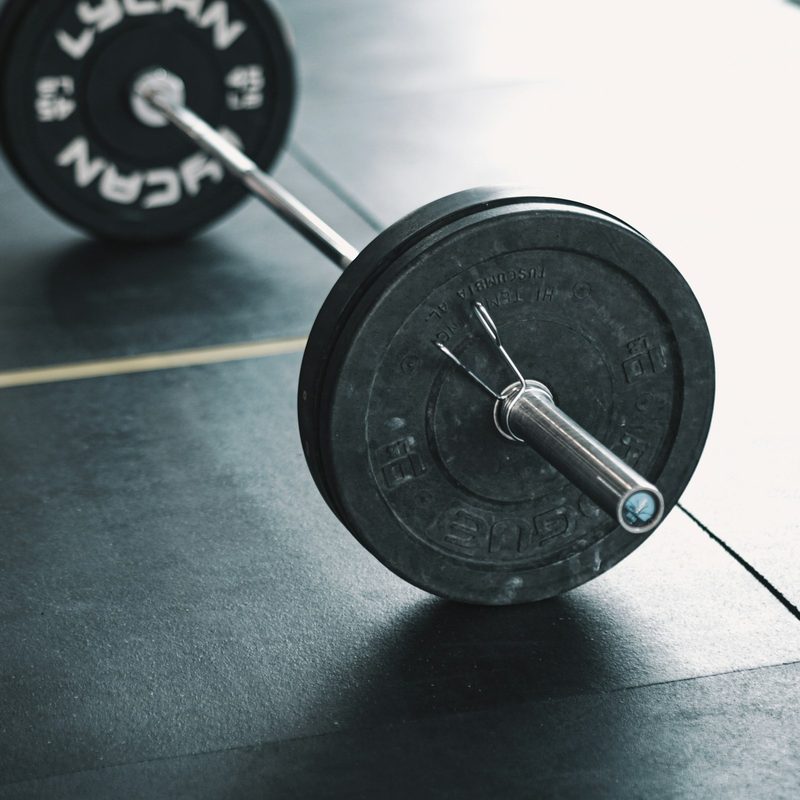
- Start with the empty bar or lighter. For the squat, bench, and press, an empty barbell is plenty to learn the pattern. If it feels heavy, use a lighter bar or a broomstick until the shape of the movement is right.
- Do sets of 5 to 8 clean reps. Enough reps to practice, few enough to stay sharp. Film a set from the side now and then; the camera sees faults you cannot feel.
- Add weight only while form holds. When you can do every rep of a light set cleanly, add a small amount, often the smallest plates available. Small jumps let the skill keep pace with the load.
- Let form be your ceiling, not your ego. The moment your reps start to break down, that is your limit for today. Stop or drop the weight. A missed rep with good form beats a made rep with bad form.
- Keep practising even as you get strong. Warm-up sets with lighter weight are ongoing skill practice. Never skip them. They are how you keep the pattern clean as the top sets get heavy.
If a lift causes sharp joint or back pain, or you simply cannot feel whether your form is right, get a qualified coach to watch you, even for one session. If you have a heart condition, high blood pressure, or a history of back or joint injury, clear heavy lifting with a professional before you load up. Fixing form early is cheap; rehab is not.
Questions people ask
How long should I lift the empty bar before adding weight?
Is it really worth filming myself?
Will going slow like this make me weaker than my friends?
Does this apply to machines and dumbbells too?
What if I have been lifting heavy with bad form for a while?
References
- Sale DG. Medicine & Science in Sports & Exercise. Neural adaptation to resistance training. 1988. doi.org/10.1249/00005768-198810001-00009
- Kantak SS, Winstein CJ. Behavioural Brain Research. Learning-performance distinction and memory processes for motor skills: A focused review and perspective. 2012. doi.org/10.1016/j.bbr.2011.11.028
- American College of Sports Medicine. Medicine & Science in Sports & Exercise. Progression Models in Resistance Training for Healthy Adults (ACSM Position Stand). 2009. doi.org/10.1249/MSS.0b013e3181915670
Last reviewed 18 July 2026. We check health-condition articles against current guidelines and update the date above when we do.