KF.Social
 KF.Social Editorial
Weekly meal planning goes wrong in the same place for almost everyone: the blank page. You sit down meaning to sort out the week, open a recipe site, fall into a spiral of tabs, and an hour later you have twelve dishes that share no ingredients and no chance of actually being cooked. The fix is not more discipline, it is an order of operations. When you always plan in the same four steps, the decisions get smaller and the plan builds itself. This is that framework: pick your proteins, build the plates, map them to your real week, then turn the whole thing into one shopping list.
The short version
- Plan in a fixed order every week so the decisions get smaller: protein first, then the rest of the plate, then the schedule, then the shopping list.
- Step 1: choose three or four protein anchors for the week. Everything else hangs off these.
- Step 2: build each meal as protein plus vegetables plus a starch, using a template so you are not inventing dishes from scratch.
- Step 3: map meals onto your actual week, putting the quick ones on busy days and a flexible slot where life is unpredictable.
- Step 4: convert the plan into a single categorised shopping list, then run the same loop next week and tweak.
Why order beats effort
The reason planning feels hard is that people try to decide everything at once: what to eat, when, whether it is healthy, and what to buy, all in one overwhelming go. Breaking it into a fixed sequence removes that overload. Each step answers one question and hands a tidy result to the next. And the habit is worth building: studies of large groups of adults find that people who plan their meals eat a more varied, higher-quality diet and are less likely to carry excess weight.
The whole framework should take about fifteen to twenty minutes once you are used to it, and it gets faster because you reuse most of it week to week. Here is the loop in full, then each step in detail.
1. Choose protein anchors. 2. Build the plates. 3. Map to your week. 4. Write one shopping list. Always in that order. The order is the whole trick.
Step 1: Choose your protein anchors
Start with protein because it is the hardest part of the plate to improvise and the part most people fall short on. Pick three or four protein anchors for the week. These are the foods your dinners will be built around, and reusing them across several meals keeps shopping simple and cheap.
Mix in whatever you enjoy and can cook. A typical set might be chicken thighs, tinned fish, eggs, and a plant option, but there is no animal-versus-plant rule here. Lentils, chickpeas, black beans, tofu, and tempeh are excellent anchors in their own right, cheaper than most meat and high in fibre as well as protein. Many people build a strong week entirely on plants, or split it half and half. The only real requirement is that each anchor gives a solid dose of protein and that you will genuinely eat it.
| Anchor type | Examples | Rough protein per typical portion |
|---|---|---|
| Poultry and meat | Chicken thighs, lean mince | about 30 to 45 g |
| Fish | Tinned tuna, salmon, mackerel | about 20 to 30 g |
| Eggs and dairy | Eggs, Greek yoghurt, cottage cheese | about 12 to 20 g |
| Legumes | Lentils, chickpeas, black beans | about 15 to 18 g per cooked cup |
| Soy | Tofu, tempeh, edamame | about 17 to 29 g |
Step 2: Build the plates
Now give each anchor a home. Rather than inventing full recipes, use a simple plate template and let the anchor slot in: protein, plus vegetables, plus a starch. That single shape covers most balanced meals, and swapping the components gives you all the variety you need without new instructions to learn.
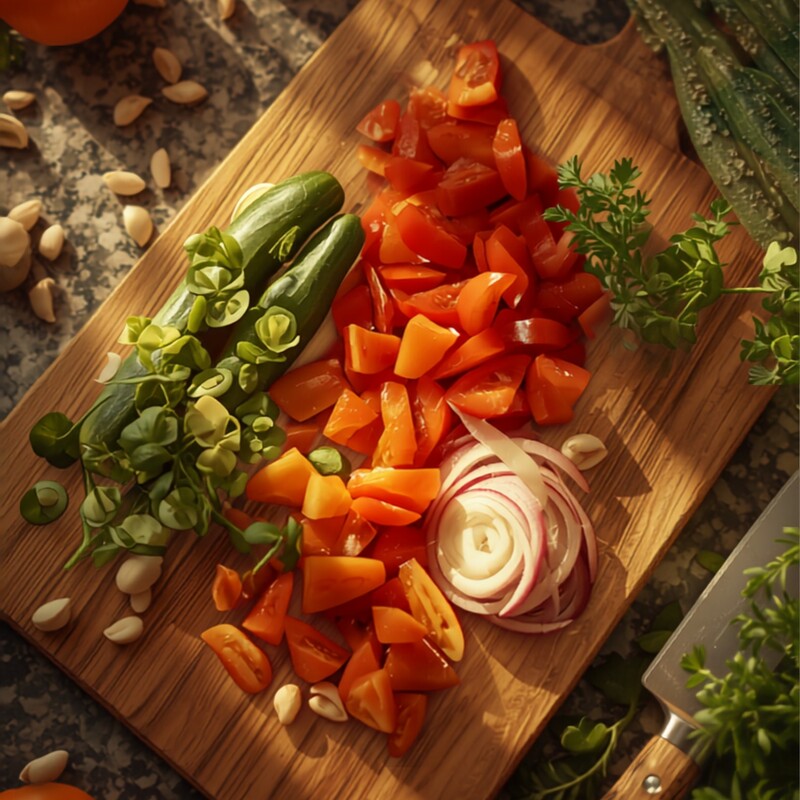
- Pick the vegetables. Choose two or three you like and will actually finish. Frozen counts and cuts waste, so a couple of bags of frozen veg belong on every plan.
- Pick the starch. Rice, potatoes, pasta, wraps, or bread. One or two for the week is plenty, and they carry across many meals.
- Assemble the meals. Combine anchor plus veg plus starch into your dinners: a stir-fry, a traybake, a grain bowl, a chilli. The same three parts, rearranged.
- Reuse for lunch. Cook extra at dinner and let it become the next day's lunch. Planning leftovers on purpose is the biggest time saver there is.
You get variety by rotating components, not by cooking unrelated dishes. The same chicken or chickpeas becomes a stir-fry one night and a grain bowl the next just by changing the veg, starch, and sauce.
Step 3: Map meals to your real week
A plan that ignores your calendar is fiction. Before you finalise anything, look at your actual week and place meals where they fit. This is the step that decides whether the plan survives contact with reality.
- Put quick meals on busy days. On the nights you get home late or train, plan a fifteen-minute meal or a reheated portion, not an ambitious cook.
- Put the bigger cook where you have time. A batch cook or a longer recipe goes on your quietest evening, and it feeds you across the next few days.
- Add a flexible slot. Leave one night for a takeaway, eating out, or using up whatever is left. A planned gap keeps the plan honest.
- Do not fill every slot. Leftovers, a repeat of a favourite, or a simple fallback can cover several slots. You rarely need seven unique dinners.
Step 4: Turn it into one shopping list
The final step is where the plan becomes real. Go through your mapped week and write a single shopping list, grouped by where things live in the shop: produce, chilled, tins and dry goods, frozen. Grouping the list this way means one efficient trip instead of doubling back, and it stops the impulse buys that happen when you wander.
Check your cupboards and fridge first so you do not rebuy what you have, and lean on staples that stretch across meals: a bag of rice, a few tins of beans, frozen veg, eggs, and your protein anchors. Because your plates share components, the list stays short and the cost stays down. Then you are done, and next week you repeat the same four steps, keeping what worked and swapping out anything that got boring.
A shared-component list is also what keeps meal planning affordable. When five dinners all draw on the same rice, the same tins of beans, the same bag of onions, and two or three protein anchors, you buy in useful quantities and waste very little. Compare that with a week of unrelated recipes, where half a bunch of an unusual herb rots in the drawer and a one-off spice sits unused for a year. The framework is not just faster to shop, it quietly cuts both your food bill and the amount you throw away.
Planning meals without turning them into a shopping list is where most plans quietly die. The list is the bridge between a plan on paper and food in the fridge, so it is the one step you never cut.
Run the loop weekly
The framework is a loop, not a one-off. The first week or two takes real thought, and that is normal, since new routines take weeks rather than days to feel automatic. Tie the session to a fixed cue, such as Sunday morning coffee, so it has a reliable trigger. By the time you have run it a handful of times, most of the plan carries over from previous weeks and you are mostly making small edits. That is the point where planning stops feeling like a chore and starts feeling like the default.
Questions people ask
How long should weekly meal planning take?
Do I have to plan all seven days?
What if I get bored eating similar meals?
Can I use this framework on a plant-based diet?
References
- Ducrot P, et al. International Journal of Behavioral Nutrition and Physical Activity. Meal planning is associated with food variety, diet quality and body weight status in a large sample of French adults. 2017. doi.org/10.1186/s12966-017-0461-7
- Lally P, et al. European Journal of Social Psychology. How are habits formed: Modelling habit formation in the real world. 2010. doi.org/10.1002/ejsp.674
Last reviewed 18 July 2026. We check health-condition articles against current guidelines and update the date above when we do.