KF.Social
 KF.Social Editorial
You know the feeling. On Sunday, five identical boxes of chicken, rice, and broccoli look like a triumph of discipline. By Wednesday they taste like punishment, and by Thursday you are ordering takeaway and telling yourself meal prep is not for you. The problem is almost never the cooking. It is monotony. Your brain is wired to get tired of a flavour you have eaten repeatedly, which is why the fourth identical lunch feels worse than the first even though nothing has changed. The fix is not to cook five different meals, which nobody has time for. It is to build variety into a small amount of cooking, so the same base ingredients feel like different meals across the week.
The short version
- The enemy is not repetition of ingredients, it is repetition of the exact same flavour, a real effect your brain uses to push you toward a varied diet.
- Cook components, not complete meals: a couple of proteins, a couple of carbohydrates, and a big tray of vegetables, then combine them differently each day.
- Sauces and dressings are the cheapest variety hack there is. The same base tastes Mexican, Thai, or Mediterranean depending on what you add at the end.
- Keep crunchy and wet elements separate until you eat, so nothing turns to mush by mid-week.
- Planning a varied week is linked with better overall diet quality, so variety is not just nicer, it helps the whole thing stick.
Why the same meal turns grim so fast
There is a real mechanism behind meal-prep fatigue. As you eat a particular food, its appeal drops even while your appetite for other foods stays high. It is why you can be too full for more main course but still find room for dessert. Eat the identical meal several days running and that fading appeal stacks up, so the fifth box genuinely tastes worse to you than the first. You are not weak-willed. Your palate is doing exactly what it evolved to do, which is nudge you toward a more varied diet.
This matters beyond enjoyment. In a large study of over 40,000 adults, people who planned their meals tended to eat a more varied, higher-quality diet. Variety is not a luxury on top of good eating. It is part of what makes good eating last. So the goal is not to force down repetitive food through willpower. It is to design the week so the food stays interesting enough that you keep choosing it.
You are not trying to cook more. You are trying to make a small amount of cooking feel like more meals. Everything below is about getting maximum variety from minimum extra work.
Cook components, not finished meals
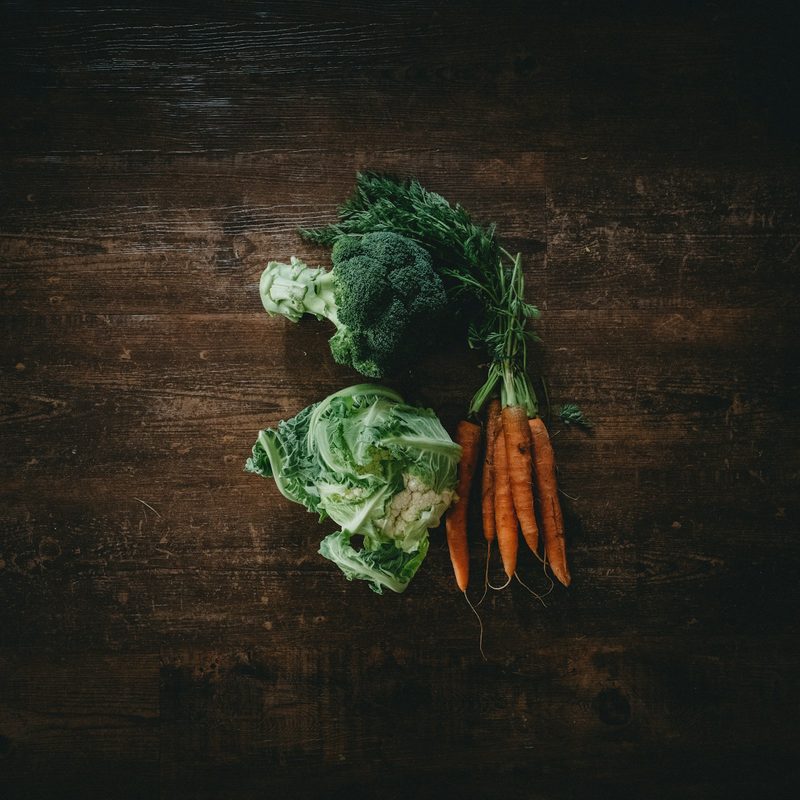
The single biggest shift is to stop prepping five copies of one meal and start prepping a small pantry of parts. When you keep the building blocks separate, you assemble a different plate each day in about two minutes, using food you already cooked once.
| Component | Prep once | Why it earns its place |
|---|---|---|
| Proteins (pick 2) | e.g. roast chicken and a pan of spiced tofu or beans | Alternating even two proteins halves the repetition instantly |
| Carbohydrates (pick 2) | e.g. rice and roasted potatoes, or quinoa and wraps | Same protein feels new on a different base |
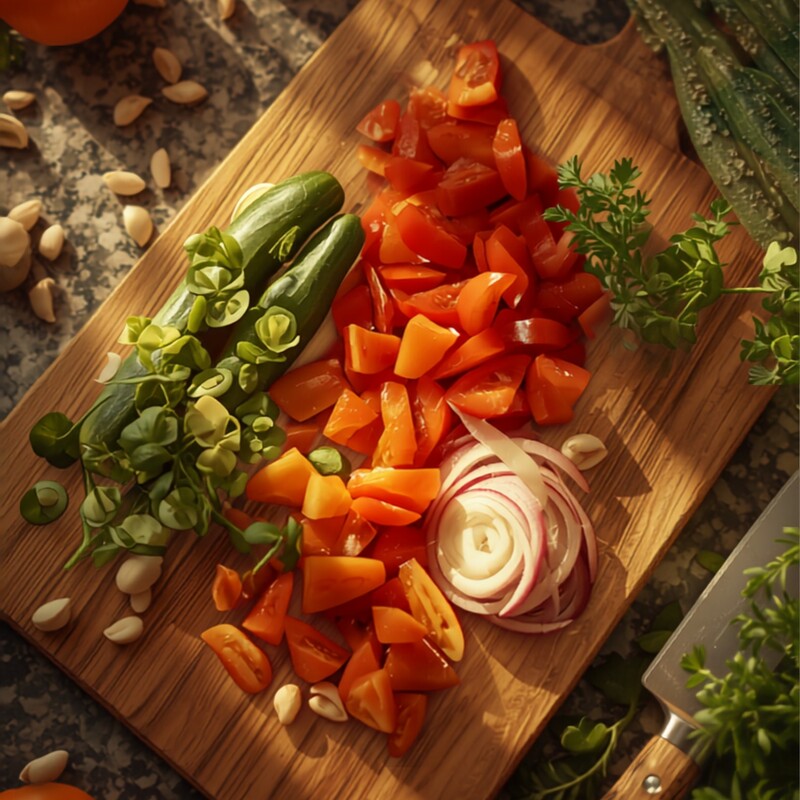
| Vegetables (1 big batch) | A large tray of mixed roasted vegetables | Colour, fibre, and volume across every meal |
| Flavour finishers | 2 or 3 sauces or dressings, made or bought | The lever that changes the whole personality of a meal |
With two proteins, two carbohydrates, and one big vegetable tray, you already have four different core combinations before you touch a sauce. Add sauces and you have a dozen. Crucially, the plant-based option is not an afterthought here. A batch of spiced chickpeas, marinated tofu, or a lentil ragu is every bit as versatile as roast chicken, arguably more, because pulses soak up whatever flavour you give them. Mixing an animal and a plant protein across the week is one of the easiest ways to keep things varied and your fibre high.
Grab a base, add a protein, pile on vegetables, and finish with a sauce. Monday is a burrito bowl, Tuesday is the same parts as a Thai-style bowl, Wednesday is a Mediterranean plate. Same fridge, three different lunches.
Sauces are the cheat code
If you only take one idea from this, take this one. The fastest way to make identical ingredients taste like completely different meals is to change the sauce at the end. A bowl of rice, chicken, and vegetables is one meal with salsa and lime, another with peanut-lime dressing, and another with lemon, olive oil, and herbs. You did not cook anything new. You changed the finish.
- Fresh and zingy: lemon or lime juice, olive oil, garlic, herbs. Mediterranean in seconds.
- Rich and savoury: soy or tamari, sesame oil, a little ginger. Turns a plain bowl East Asian.
- Warm and smoky: salsa, chipotle, or smoked paprika with yoghurt or a plant-based alternative.
- Creamy and nutty: peanut or tahini thinned with lime and a splash of water.
- Sharp and bright: a spoon of pickles, kimchi, or quick-pickled onions for acid and crunch.
Dressing a whole week of boxes on Sunday makes everything soggy. Keep sauces in small separate pots and add them just before eating. This one habit does more for freshness and variety than any recipe.
Texture beats boredom too
Boredom is not only about flavour. Prepped food often gets dull because everything ends up soft and the same temperature. A meal with one crunchy element and one bright, fresh element feels alive even if the cooked base is identical to yesterday's. This is why keeping components separate matters so much: it protects texture.
- Store the crunchy things dry and separate. Toasted nuts, seeds, croutons, raw peppers, and crisp lettuce go in on the day, not in the box on Sunday.
- Add something raw or fresh at serving. A handful of spinach, sliced tomato, fresh herbs, or a squeeze of citrus lifts a reheated base instantly.
- Vary the temperature. The same roasted vegetables that were hot on Monday work cold in a grain salad on Thursday, which reads as a new meal.
- Rotate the format. Bowl, wrap, and plate feel different even with the same filling. A wrap on Wednesday breaks the box monotony.
A week that does not repeat
Here is what all of this looks like on a real week, built from one afternoon of cooking: two proteins, two carbohydrates, one vegetable tray, and three sauces. Notice that the ingredients barely change, but no two days feel the same.
| Day | Base + protein | Finish |
|---|---|---|
| Monday | Rice, chicken, roasted veg | Salsa and lime, burrito-bowl style |
| Tuesday | Quinoa, spiced tofu, roasted veg | Peanut-lime dressing, in a wrap |
| Wednesday | Potatoes, chicken, roasted veg | Lemon, olive oil, herbs on a plate |
| Thursday | Rice, tofu or beans, cold veg | Soy, sesame, ginger as a cold bowl |
| Friday | Wrap, either protein, fresh salad | Yoghurt or plant-based sauce, plus pickles |
Cooking your own food more often is itself linked with a better-quality diet, and variety is what keeps you doing it. The person who eats slightly imperfect but genuinely enjoyable prepped food every day beats the person who cooks a flawless meal on Sunday and abandons it by Wednesday. Sustainable beats optimal. Build in the sauces, keep the crunch separate, and let two proteins do the work of five.
If a full component system feels like a lot, start with one rule: cook two proteins instead of one, and keep three sauces in the fridge. That alone kills most mid-week boredom for almost no extra effort.
Questions people ask
Why do I get sick of the same meal even when I liked it at first?
Isn't cooking components more work than one big meal?
How do I keep prepped meals from going soggy?
Can I do this on a plant-based diet?
References
- Ducrot P, et al. International Journal of Behavioral Nutrition and Physical Activity. Meal planning is associated with food variety, diet quality and body weight status in a large sample of French adults. 2017. doi.org/10.1186/s12966-017-0461-7
- Wolfson JA, Bleich SN. Public Health Nutrition. Is cooking at home associated with better diet quality or weight-loss intention?. 2015. doi.org/10.1017/S1368980014001943
- USDA Food Safety and Inspection Service. Leftovers and Food Safety. 2024. fsis.usda.gov/food-safety/safe-food-handling-and-preparation/food-safety-basics/leftovers-and-food-safety
Last reviewed 18 July 2026. We check health-condition articles against current guidelines and update the date above when we do.