KF.Social
 KF.Social Editorial
A plateau rarely means your whole body has stopped adapting. Usually one small part of the lift, the same few inches where the bar always slows and stalls, is holding the rest hostage. An isometric hold is the one tool that lets you stop the bar dead in that exact spot and pour hard effort into it, without the momentum and the easy parts of the rep bailing you out. Done well, it is one of the fastest ways to teach a weak position to hold its own weight.
The short version
- An isometric is a hard muscle contraction with no movement, either pushing against something that will not budge or holding a load fixed in place.
- Isometric strength gains are highly joint-angle specific, so you get the most carryover by training the exact position where your lift stalls.
- Two flavours do two jobs: **overcoming isometrics** (push into an immovable pin) build raw force at a sticking point, and **yielding isometrics** (hold a load still) build control and tendon strength.
- Use hard holds of about 3 to 10 seconds at high effort, a few sets, on top of your normal lifting rather than instead of it.
- Isometrics also raise your blood pressure sharply during the hold, so breathe and skip long maximal holds if you have uncontrolled high blood pressure until you have spoken to your doctor.
What an isometric hold actually is
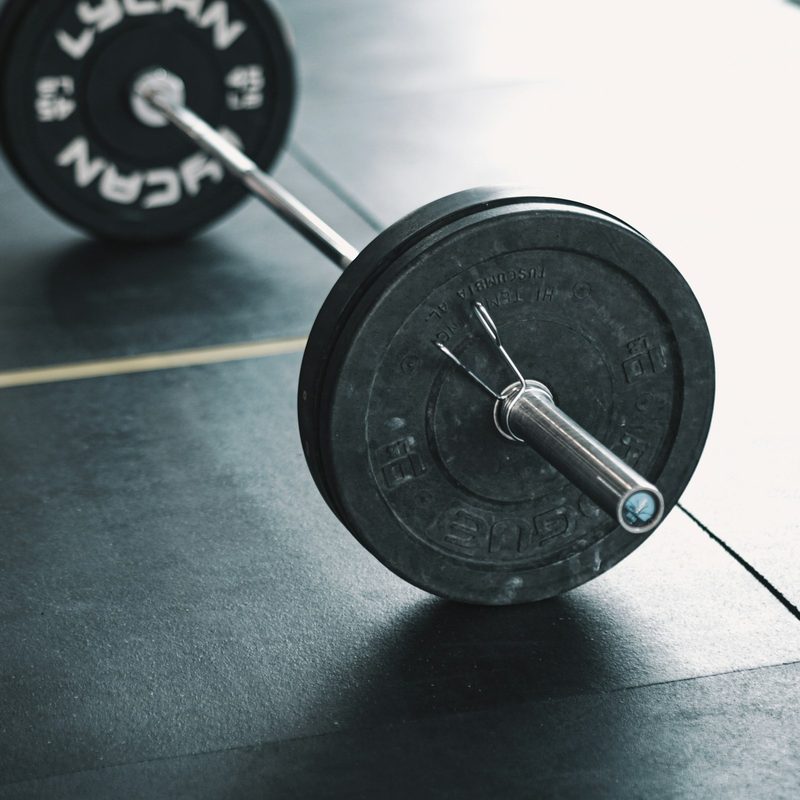
An isometric contraction is muscle working hard while the joint angle stays put. Nothing visibly moves. You see it every time someone holds a plank, pins a heavy bar against the safety rails, or grips a loaded barbell at a dead stop. The muscle is firing at full effort, but there is no lifting and no lowering.
This matters for plateaus because a normal rep is a moving target. The load is easy at the strong parts of the range and only truly hard for a moment at your weakest point. Momentum from the easy part carries you through the hard part, so the weak spot never has to fully solve the problem on its own. An isometric removes the escape route. You stop at the hard position and stay there, and now the only thing keeping the load in place is the muscle you have been avoiding training.
| Type of hold | What you do | What it builds |
|---|---|---|
| Overcoming isometric | Push or pull as hard as you can into something that cannot move, like a bar against pins set at your sticking point | Maximal force production at that exact angle, plus the nervous-system drive to reach it fast |
| Yielding isometric | Hold a real load still in a fixed position for time, resisting the urge to move | Control, position awareness, and tendon strength at the held angle |
Why they break through a plateau
Most stalled lifts fail at the same place every time. On the bench it is often a few inches off the chest. On the squat it is the middle of the drive out of the hole. On the deadlift it is the bar just past the knee. That repeatable failure spot is your sticking point, and it is usually where your leverage is worst and your force output is lowest.
The catch with isometrics is that their strength gains are stubbornly local. When you train hard at one joint angle, you get large gains at that angle and much smaller gains a short distance away. In most settings that specificity is a limitation. For a plateau it is the whole point. You do not want to get generally, vaguely stronger. You want to get stronger in one narrow band, and isometrics deliver strength almost exactly where you put the work.
Because isometric strength is so angle specific, the sensible way to use it is to set up your hold at the precise position where your lift stalls, not somewhere convenient. Train the inch that fails, not the inches that already work.
Overcoming isometrics have a second edge. Pushing all-out into an immovable object lets you recruit muscle harder than a submaximal rep does, and it teaches your nervous system to switch that force on quickly. That combination, more force available at the bad angle and a faster ramp to it, is often exactly what a stuck lifter is missing.
It helps to be honest about how narrow the effect is. In controlled work on isometric training, the strength gained tends to peak at the trained angle and fall away as you move even fifteen or twenty degrees from it. When your goal is general strength, that narrowness is frustrating, because it means one held position does not carry very far. When your goal is a single stubborn inch of a lift, that same narrowness is a gift. You are not hoping the benefit spreads. You are aiming it. The more precisely you place the hold on the exact spot where the bar dies, the more of the work lands where it is needed, and the less of it leaks into positions that were never the problem.
There is a skill element too, not just a strength one. A sticking point is often as much about position and bracing as it is about raw force. When you sit in a yielding hold at the worst part of a squat or a bench press, you get uninterrupted time to feel what a solid position there is like, without the rush of a moving rep. That rehearsal, repeated over a block, teaches you to arrive at the hard spot already braced and organised rather than scrambling to fix your position mid-lift. Strength and control improve together, and both feed the same stalled number.
How to program them without wrecking your week
Isometrics are a supplement, not a replacement. You still need to practise the full lift, because strength you cannot express through a normal rep is not much use. Bolt the holds on around your main work and keep the doses short and hard.
- Find the exact sticking point. Film a near-maximal set from the side, or feel where the bar consistently slows and stalls. That position is your target angle. Everything else follows from getting this right.
- Pick your hold type. If you need raw force to get through the spot, use an overcoming isometric: set safety pins at that height and drive into them as hard as you can. If you lose position or control there, use a yielding isometric: hold a real submaximal load fixed at that angle.
- Keep the holds short and hard. Aim for about 3 to 10 seconds of genuinely maximal or near-maximal effort per hold. Longer, easier holds build endurance, not the strength you are chasing. Rest fully between them.
- Use a low set count. Three to five hard holds is plenty. This is high-intensity nervous-system work, so more is not better once quality drops.
- Place them thoughtfully. Do overcoming isometrics before your main lift as potent, low-fatigue primers, or on a separate day. Yielding holds sit well as accessory work after your main sets. Run a block for a few weeks, then retest the full lift.
Turning every hold into an endurance test. A 60-second wall sit and a 5-second maximal pin press are different tools. For breaking a strength plateau you want short, brutal, near-maximal holds at your sticking point, not long comfortable ones.
Breathing, blood pressure, and staying safe
Isometrics are safe and useful for most people, and they are gentle on the joints because there is no repeated grinding through a range. But two things deserve attention.
First, a hard sustained contraction spikes your blood pressure sharply during the hold, especially if you strain and hold your breath. For healthy trainees this is transient and fine. If you have uncontrolled high blood pressure or a heart condition, long maximal holds are worth clearing with your doctor first, and you should never hold your breath and bear down through a long isometric. Breathe steadily and keep the holds short.
Second, set up so a failure is boring. For overcoming isometrics, use a squat rack with pins or a floor you cannot break. For yielding isometrics, stay well short of the load and duration where your position would collapse. The goal is intense effort into a stable setup, not a heroic hold that ends in a dropped bar.
It is worth knowing why the pressure spike happens, because understanding it makes the caution feel less arbitrary. During a hard held contraction the working muscle squeezes down on its own blood vessels, so your heart has to push against more resistance to keep blood moving. Add breath-holding and straining and the pressure climbs higher still. For a healthy person this lasts only as long as the hold and settles almost immediately after. The people who need to be careful are those whose baseline is already high or whose heart cannot tolerate a sudden extra demand, which is exactly why a quick conversation with your doctor is the sensible first step if that describes you.
Isometric wall squats and handgrip holds have a track record beyond the gym: in a large meta-analysis, structured isometric training lowered resting blood pressure meaningfully. Chronic isometric training and the acute pressure spike during one hold are different things, and both can be true at once.
Questions people ask
How long should I hold an isometric to break a plateau?
Overcoming or yielding: which should I use?
Will isometrics make me stronger through the whole lift?
Are isometric holds safe for my joints?
References
- Lanza MB, Balshaw TG, Folland JP. European Journal of Applied Physiology. Is the joint-angle specificity of isometric resistance training real? And if so, does it have a neural basis?. 2019. pubmed.ncbi.nlm.nih.gov/31522276
- Journal of Science and Medicine in Sport. Effects of isometric vs. dynamic resistance training on isometric and isokinetic muscular strength: A systematic review with meta-analysis. 2025. jsams.org/article/S1440-2440(25)00223-3/abstract
- Edwards JJ, et al. British Journal of Sports Medicine. Exercise training and resting blood pressure: a large-scale pairwise and network meta-analysis of randomised controlled trials. 2023. doi.org/10.1136/bjsports-2022-106503
Last reviewed 18 July 2026. We check health-condition articles against current guidelines and update the date above when we do.