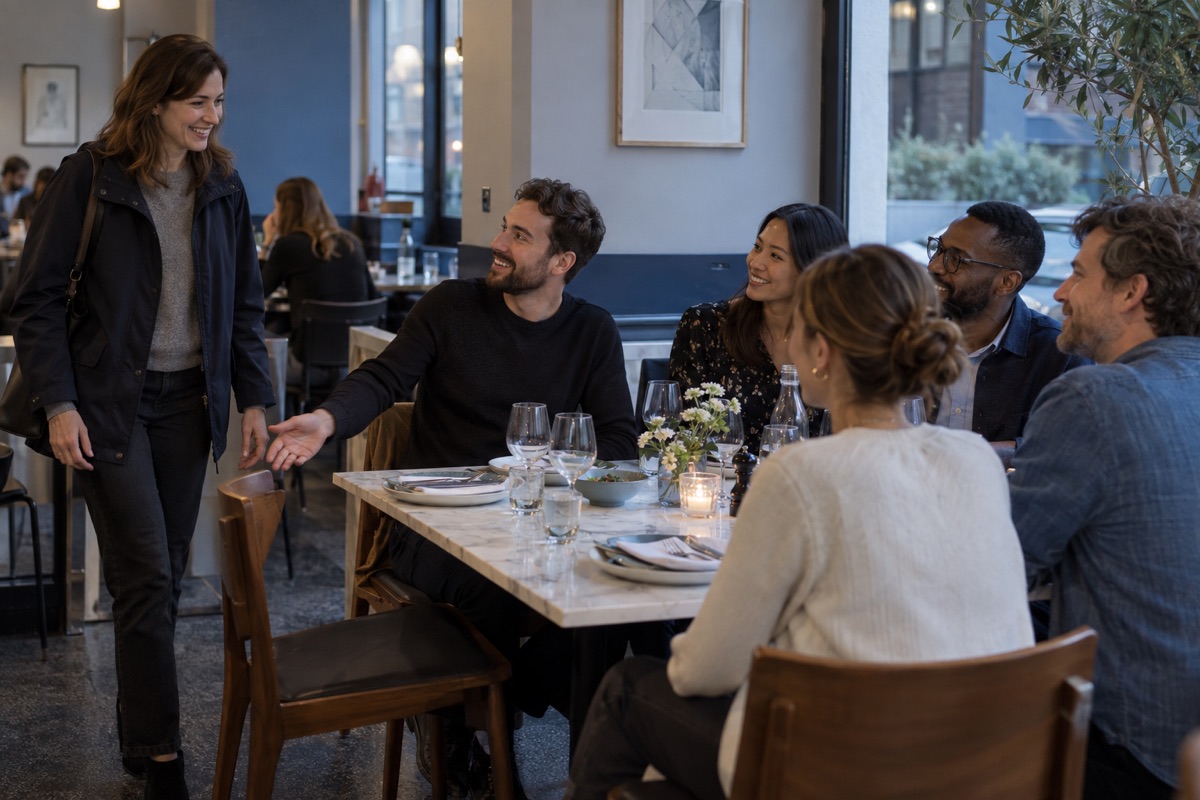
Image note: the arrival scene above is AI-generated for illustration. It does not depict actual KF.Social guests or an actual event.
A first dinner club is easier to picture when you know the practical details. On KF.Social, you book a London dinner and meet the other people at a table of six. We match the group by age and interests and book the restaurant. The conversation is yours: there is no performance to deliver and no guarantee that every pairing will feel right.
01Before paying: check the evening, not just the idea
Start with the date, time, booking terms and cost shown in the booking flow. A seat costs £15 to book; food and drinks are paid separately at the restaurant. Leave room in your budget for your journey and meal, rather than treating the booking fee as the total cost of going out.
You can book on the web. Book an evening you can genuinely attend, and read the cancellation information before paying. If a detail that matters to you is unclear, ask before completing the booking rather than assuming it will be possible to change it later.
02When you receive the restaurant details
Check the route, the menu and the arrangements you need. Do not assume that a restaurant is accessible, quiet or suitable for a dietary requirement solely because it hosts a social dinner. Contact the organiser or venue about a specific need before relying on an arrangement.
Allow enough travel time to arrive without rushing. Save the address and booking instructions. If you are running late, use the available group contact to let people know; nobody at the table can infer what has happened from an empty chair.
03Walking in alone
Tell the restaurant staff the booking name or details from your confirmation and ask where the table is. You do not need to identify the group by guessing which customers look unfamiliar with each other. Once you find it, a simple “Hi, I’m Sam” is enough.
You might feel nervous, relaxed or somewhere between the two. Other people may feel differently. There is no need to announce your nerves, conceal them perfectly or take responsibility for making everyone immediately comfortable.
04The first few minutes
Introduce yourself to the people nearest you and ask an easy question: “Have you been here before?” or “What made you try this dinner?” Menus and orders give the table something practical to do while the group gets settled.
You can share a hobby, a place you enjoy or something you have been looking forward to. Your job title is optional, and you do not owe strangers an account of your relationship status or why you want to meet people. If a question feels too personal, “I’d rather not get into that tonight” is a complete answer.
05During the meal
Listen, ask follow-up questions and leave room for other people to join in. If two conversations form, you do not have to monitor both. If someone has been quiet, invite them in without putting them on the spot: “Have you tried anything good around here?”
Not every table will become an animated group. A pause or an ordinary conversation is not proof that you have failed. You can use our dinner conversation guide for ideas, but treat it as a fallback rather than a script to work through.
06Agree the bill before it arrives
Ask how shared dishes and drinks will be paid for before ordering them. You can say, “I’ll cover what I order, if that works.” Read our group dinner bill guide if this is the part you find awkward. The booking fee does not cover the restaurant bill.
07Leaving and staying in touch
It is fine to leave when you need to catch your train or when the meal finishes. Thank the group and settle what you owe. You do not have to continue to another venue or share your phone number because someone asks.
If you enjoyed a conversation, make an optional, specific invitation: “I liked talking about films. Would you fancy that exhibition next weekend?” A pleasant dinner can be worthwhile even if it does not lead to a second meeting. A friendship takes mutual interest and time; this is simply a chance to begin.
 KF.Social