KF.Social
 KF.Social Editorial
Most exercise instruction leans hard on sight: watch the demo, check your form in the mirror, follow the screen. Strip that away and it can feel like the whole activity is off-limits, when in truth almost none of it depends on vision. Muscles do not need to see to get stronger, and your heart does not need a mirror to get fitter. What people with visual impairment usually run into is not a physical ceiling but a wall of unfamiliar space, missing feedback, and shaky confidence. Every one of those is solvable with the right cues, a predictable setup, and a bit of support. This is a practical starting point, written around what actually gets in the way.
The short version
- The limit is almost never physical capacity. It is unfamiliar space, missing feedback, and confidence, and all three can be designed around.
- Research consistently finds adults with sight loss are less active than sighted peers, and the strongest barriers are things like low self-efficacy and the environment, not an inability to train.
- Replace visual feedback with other channels: touch, verbal cues, count and tempo, and body awareness. These coach form at least as well as a mirror.
- A predictable, clutter-free space with fixed equipment positions turns a stressful gym into a safe, repeatable routine.
- Global activity targets apply to you too: aim toward 150 to 300 minutes of moderate activity a week plus muscle work on 2 or more days, starting below that and building.
Fitness is fully trainable without sight
Start by separating two things that get blurred together. Vision is about how you take in the world. Fitness is about how strong, how enduring, and how capable your body is, and that is trainable through channels that have nothing to do with sight. Blind and partially sighted athletes compete at the highest levels, from goalball to tandem cycling to guided running. The ceiling is far higher than most sight-dependent advice implies.
Yet the numbers show a real gap in everyday activity. A systematic review of physical activity among adults with sight loss in high-income countries found that activity levels tend to be low, and, crucially, that the factors driving this are things like low self-efficacy and environmental barriers rather than a physical inability to move. In plain terms, the problem is mostly access and confidence, and those are exactly what a good setup fixes.
Your muscles and heart do not need your eyes. The work is not making your body capable, it is removing the barriers of space, feedback, and confidence that sit in front of an already capable body.
The real barriers, named
You cannot solve a barrier you have not named. For most people with visual impairment, three keep coming up, and none of them is a lack of strength or stamina.
- Unfamiliar and changing space. A gym where equipment moves, walkways shift, and other people leave things around is hard to navigate safely, so many people simply avoid it.
- Missing feedback. Standard coaching assumes you can see a demonstration and your own form. Without an alternative, it is hard to know if a movement is right.
- Confidence and fear of injury. Worry about tripping, colliding, or looking lost is a powerful deterrent, and it feeds on itself the longer you stay away.
Reframing the problem this way is freeing, because each of these has a practical answer. You can make space predictable, you can replace visual feedback with other cues, and confidence tends to follow once the first two are handled and you string together a few successful sessions.
Cues that replace the mirror
A mirror is just one feedback channel, and not even a very good one for many lifts. There are several others, and used together they coach movement well. The trick is to build a movement through touch and words first, then let your own body awareness take over.
- Tactile setup. Learn a lift by feel. Hands on the bar, feet found by touch against a marker, a coach or partner guiding your limb through the path once or twice. Your body remembers the shape.
- Clear verbal cues. Short spoken instructions like chest up, drive through your heels, elbows in replace watching a demo. A good coach or a well-made audio app can narrate every rep.
- Count and tempo. A steady count, such as three seconds down and one up, gives structure and pace without any need to see a clock or screen. It also keeps reps honest.
- Body awareness. Tune into where your joints are and how the effort feels. This sense, sometimes called proprioception, is trainable and quickly becomes your main form check, sighted or not.
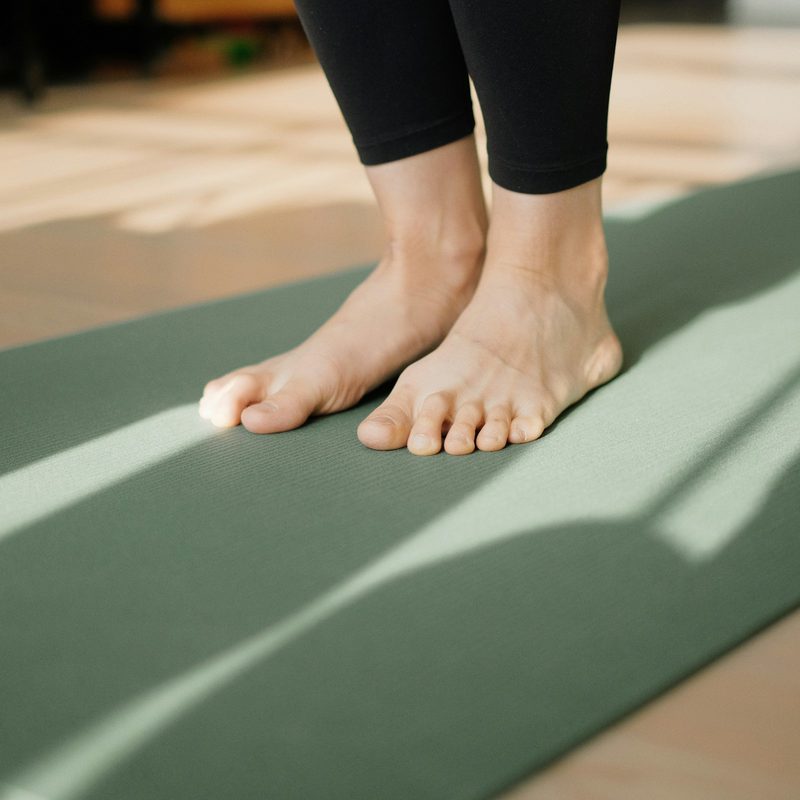
Use fixed physical references: a mat edge under your feet, tape or a texture marking a start position, a wall at your back. Consistent contact points make a movement repeatable and safe without any visual check.
Set up a safe, predictable space
Predictability is the single biggest confidence builder. Whether you train at home or in a gym, the goal is a space where nothing surprises you, so your attention goes to the workout rather than to navigation.
- Fix everything in place. Keep equipment in known, unchanging spots and clear the floor of anything that could be tripped over before you start.
- Learn the room once, deliberately. Walk it with a trusted person, map the layout, and note the safe path between stations so it becomes routine.
- Prefer stable, guided equipment early. Machines with a set path, resistance bands anchored to a fixed point, and dumbbells you place yourself feel safer than crowded free-weight areas at first.
- Talk to gym staff. Many gyms will happily agree a quiet time, keep a consistent layout, or brief an instructor. Asking is normal and reasonable, not a special favour.
At home you have an advantage: total control. A single corner with a mat, a set of bands, and a couple of dumbbells, everything in the same place every time, is a genuinely excellent training environment and removes the navigation problem almost entirely.
What to train, and how to get your cardio
You do not get a smaller goal because you train without sight. The World Health Organization applies the same headline target to adults living with disability: aim toward 150 to 300 minutes of moderate aerobic activity a week, or 75 to 150 minutes of vigorous activity, plus muscle-strengthening work on 2 or more days. Start below that if you need to and build up, because some activity always beats none.
Strength work fits especially well, because most lifts are movements you can own by feel: presses, rows, squats to a box, hinges, and band work all coach nicely through touch and count. For cardio, a few options remove the navigation worry entirely.
- Fixed cardio machines, such as a stationary bike, rower, or a treadmill used carefully with familiarised controls, keep you in one safe spot.
- Guided or tethered running, with a sighted guide runner or a short tether, is how many blind runners train and race, and clubs exist to match guides.
- Tandem cycling lets you put in real aerobic work with a partner steering, indoors or out.
- Circuit-style strength, moving between set stations with short rests, gives a strong cardio effect without needing a dedicated machine.
This is general education, not a personal plan. If you have a health condition alongside your visual impairment, or any balance or dizziness issues, have a quick chat with a doctor or physiotherapist about what is safe for you before you start.
Build confidence, then momentum
Confidence is not a personality trait you either have or lack, it is the residue of successful attempts. That is why the order matters: make the space predictable and the cues clear first, so your early sessions actually go well, and the confidence builds itself. Starting with a trusted training partner, a supportive instructor, or a well-designed app that narrates each step shortens this process a lot.
Working out with visual impairment is mostly a design problem, not a physical one. Replace the mirror with touch, words, count, and body awareness, make your space predictable, use guided options for cardio, and let a few good sessions build the confidence for the next ones. Capable is trainable, with or without sight.
Questions people ask
Can you really strength train safely without sight?
How do I know my form is right if I can't see it?
What cardio works best with a visual impairment?
Should I check with anyone before starting?
References
- Bull FC, et al. British Journal of Sports Medicine. World Health Organization 2020 guidelines on physical activity and sedentary behaviour. 2020. doi.org/10.1136/bjsports-2020-102955
- Lindsay RK, et al. International Journal of Environmental Research and Public Health. Correlates of Physical Activity among Adults with Sight Loss in High-Income-Countries: A Systematic Review. 2021. doi.org/10.3390/ijerph182211763
Last reviewed 18 July 2026. We check health-condition articles against current guidelines and update the date above when we do.