KF.Social
 KF.Social Editorial
There are two nights the stove loses. One is when it is too hot to stand over a pan, and cooking would only make the flat warmer. The other is when you simply have nothing left in the tank. No-cook meals cover both. Done badly they are a limp bowl of leaves. Done well they are proper meals, built from things you assemble rather than cook, with enough protein to be filling and enough going on to be worth eating. The only real catch is food safety in the heat, which takes about thirty seconds of attention.
The short version
- A good no-cook meal follows the same balance as a hot one: a no-cook protein, something with carbs and fibre, and vegetables or fruit. Assemble, do not settle for a plain salad.
- You can hit real protein without turning on any heat, using tinned fish, tinned beans, pre-cooked or ready-to-eat proteins, dairy, and tofu.
- No-cook shines in the heat because it adds no warmth to the kitchen and cold food feels better to eat when it is hot out.
- Watch food safety in warm weather: perishable food should not sit in the danger zone of 40 to 140 degrees Fahrenheit for long, and no more than one hour when it is above 90 degrees.
- Keep a no-cook shortcut shelf stocked so a proper cold meal is always five minutes of assembly away.
Why no-cook earns its place
No-cook meals get treated as a downgrade, a thing you eat when you have given up. That is a mistake born of picturing a sad bowl of lettuce. A well-built no-cook meal is the same balance as a cooked one, just assembled cold. And on the right night it is actively better: on a heatwave, not turning the stove on keeps your kitchen and you cooler, and cold food is simply more appealing when it is thirty degrees out.
The whole skill is in the build. Skip the build and you get leaves and regret. Follow it and you get a real meal in five minutes with no washing up beyond a bowl and a fork.
No-cook is not the absence of a meal. It is the same protein, carbs, fibre, and vegetables you would cook, delivered cold. The bar is a full plate, not whatever survives in the fridge.
The no-cook build formula
Same idea as any balanced plate, just chosen from things that need no heat. Pick one from each slot and you have a meal, not a snack.
| Slot | No-cook options | What it adds |
|---|---|---|
| No-cook protein | Tinned tuna, mackerel or sardines, tinned beans and chickpeas, cottage cheese, Greek yoghurt, hummus, ready-to-eat tofu, pre-cooked chicken | The filling core, landing 25 to 40 g of protein |
| Carb and fibre | Wholemeal bread or wraps, oatcakes, cold pre-cooked rice or pasta, tinned potatoes, plenty of raw veg | Energy and fullness without a boil |
| Vegetables or fruit | Bagged salad, tomatoes, cucumber, grated carrot, tinned sweetcorn, berries, apple | Colour, fibre, and part of your 400 g a day |
That is the entire method. A no-cook protein plus a carb with fibre plus some vegetables or fruit is a complete meal, and none of it needs a stove. The examples below are just this formula in different clothes.
Five no-cook meals that fill you up
1. Tuna and bean bowl
Tinned tuna, a rinsed tin of white beans or chickpeas, chopped tomato and cucumber, olive oil and lemon. About 30 grams of protein and genuinely filling, no heat at all.
2. Loaded cottage cheese or yoghurt bowl
A big scoop of cottage cheese or Greek yoghurt, topped with berries, a spoon of nuts or seeds, and a drizzle of honey. Sweet, cold, and easily 20 to 30 grams of protein.
3. Hummus and chickpea wrap
Spread hummus on a wrap, add a rinsed tin of chickpeas, grated carrot, bagged salad, and a squeeze of lemon. A fully plant-based meal, rolled and eaten cold.
4. Mezze-style plate
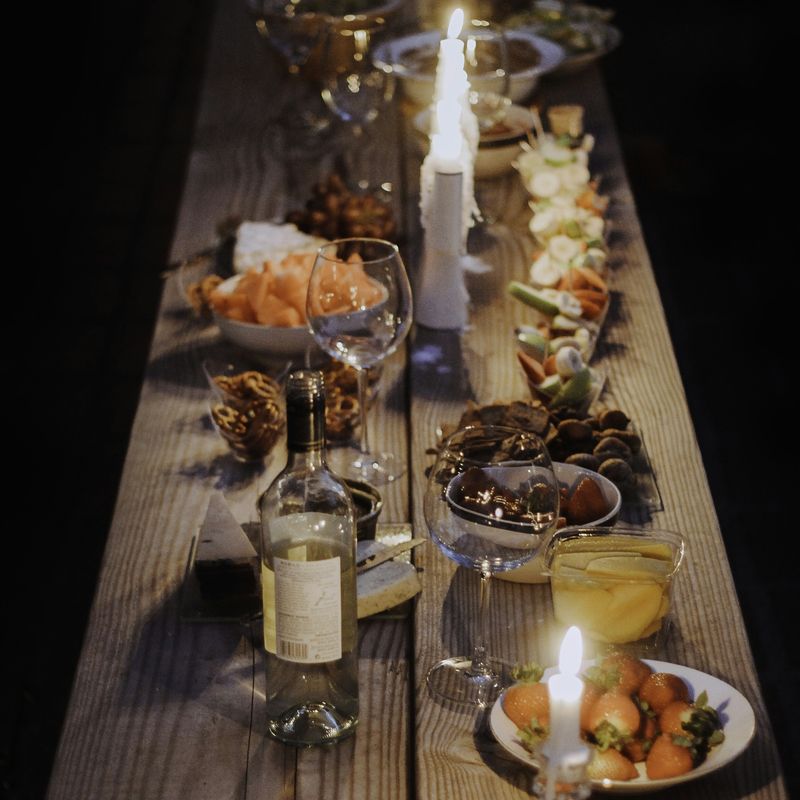
Hummus, olives, cherry tomatoes, cucumber, oatcakes or bread, and a boiled egg if you have some ready in the fridge. A grazing plate that adds up to a proper meal.
5. Cold noodle or pasta salad
Use pre-cooked or leftover cold pasta or noodles, add tinned sweetcorn, chopped peppers, pre-cooked chicken or edamame, and a soy and sesame dressing. Great made ahead and eaten straight from the fridge.
The food-safety part you should not skip
This is the one place no-cook needs care, because heat is exactly what bacteria like. The United States Department of Agriculture calls the range where bacteria multiply fastest the danger zone, from 40 to 140 degrees Fahrenheit, which is roughly 4 to 60 degrees Celsius. The rule that follows is simple: do not leave perishable food sitting out in that range.
- Do not leave perishable food out for more than 2 hours, and no more than 1 hour when it is above 90 degrees Fahrenheit, which is easy to hit on a hot day.
- Keep cold food at or below 40 degrees Fahrenheit until you eat it. If you are taking a no-cook meal out, use a cool bag with an ice pack.
- Rinse tinned beans and drain tinned fish, and treat opened tins like any other perishable, back in the fridge if not eaten.
- When in doubt after food has been warm too long, throw it out. The saved meal is never worth the risk.
The reason food safety matters more here is the weather. On a hot day the one-hour limit above 90 degrees comes up fast, especially for meals eaten outside or carried to work. Keep it cold, eat it in good time, and you are fine.
Keeping cold meals balanced
The trap with no-cook is under-eating on protein, because a bowl of salad and bread feels like dinner without carrying much. Anchor every no-cook meal with a real protein source, aiming for 25 to 40 grams, and it becomes filling rather than a snack you regret an hour later. The vegetable and fruit slot then does the fibre and micronutrient work toward your 400 grams of vegetables and fruit a day.
Plant-based no-cook eating is easy, because so many cold staples are already plant foods. Tinned beans and chickpeas, hummus, ready-to-eat tofu, edamame, nuts, seeds, and fortified soya yoghurt all fill the protein slot with honest numbers, and any of them swaps in cleanly for the tuna, chicken, or dairy above. Plant proteins are a little less dense, so a slightly bigger portion keeps you at the same target.
Keep tinned fish, tinned beans, hummus, oatcakes, and long-life wraps in, plus cottage cheese, yoghurt, and salad in the fridge. With those on hand, a proper cold meal is always five minutes of assembly away, no matter how hot or how tired you are.
Questions people ask
Can a no-cook meal be as filling as a cooked one?
How do I get enough protein without cooking?
Is it safe to eat cold food that has been left out on a hot day?
Are no-cook meals healthy or just convenient?
References
- United States Department of Agriculture, Food Safety and Inspection Service. "Danger Zone" (40 F to 140 F). 2020. fsis.usda.gov/food-safety/safe-food-handling-and-preparation/food-safety-basics/danger-zone-40f-140f
- World Health Organization. Healthy diet (Fact sheet No. 394). 2020. who.int/publications/m/item/healthy-diet-factsheet394
- Jager R, et al. Journal of the International Society of Sports Nutrition. International Society of Sports Nutrition Position Stand: Protein and Exercise. 2017. doi.org/10.1186/s12970-017-0177-8
Last reviewed 18 July 2026. We check health-condition articles against current guidelines and update the date above when we do.