KF.Social
 KF.Social Editorial
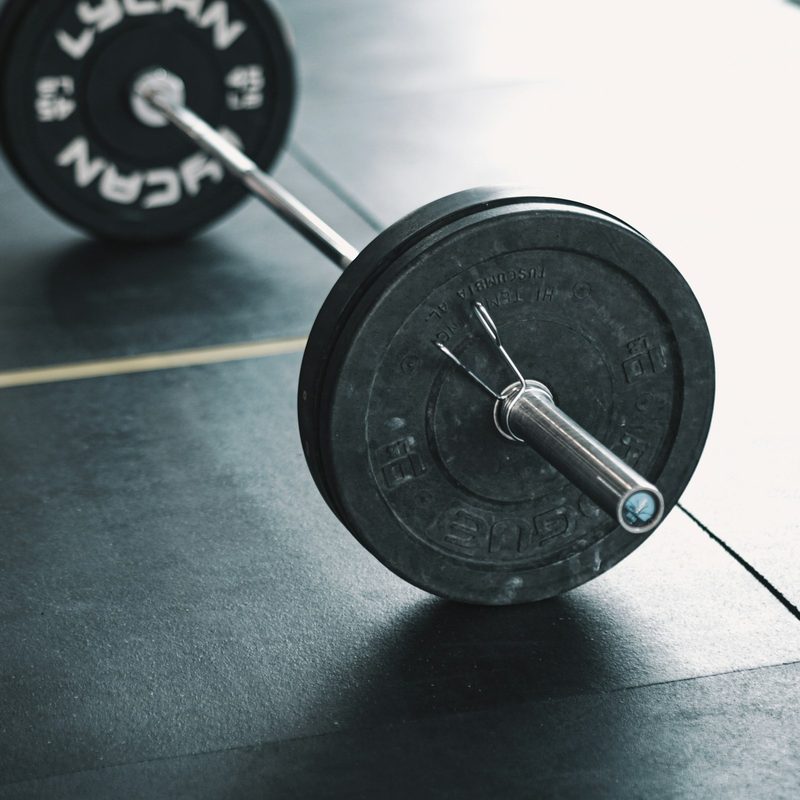
The T bar row has a reputation as a mass builder, and it earns it. One end of a barbell is pinned in a corner or a landmine holder, you load plates on the free end, and you row that end up into your torso. Because the bar swings on a fixed pivot, the path is decided for you, which means you can pour attention into pulling hard rather than balancing the weight. That is exactly why it can pile size onto your middle back. It is also why so many people ruin it: they load it heavy, round over, and heave the weight up with a straight back that slowly bends. Get a few things right and it becomes one of the most productive rows you can do.
The short version
- Set a hip hinge with a flat back and soft knees, torso somewhere near 45 degrees to the floor, and hold that angle for the whole set.
- Drive with your elbows, not your hands, pulling the bar toward your lower ribs and belly button rather than your chest.
- Pull to a hard squeeze between your shoulder blades, then lower all the way to a full stretch before the next rep.
- If your torso rises and falls to move the weight, or your lower back rounds, the load is too heavy. Strip a plate.
- The fixed bar path lets you focus on the muscle, which makes the T bar row one of the best builders of mid back thickness.
Why the T bar row builds thickness
Rows build the back in two directions. Wide grip pulls tend to chase width through the lats. Horizontal rows like this one chase thickness through the muscles in the middle of your back: the muscles between and around your shoulder blades, the traps, the rear shoulders, and the lats as they work to drag your elbow behind you. The T bar row loads all of them at once.
Its real advantage is the fixed bar path. On a free dumbbell or barbell row you spend energy stabilising the weight and keeping it on line. Here the bar can only swing on its pivot, so you can grip hard, brace, and pull without babysitting the balance. That lets you use a meaningful load and still keep the effort where you want it, which is a big part of why it feels like it thickens the back so well.
Neither is a separate muscle you can pick from a menu. Width mostly comes from developing the lats, thickness from the mid back muscles that pull your elbows behind your body. Horizontal rows like the T bar row bias the thickness side, which is why they pair so well with a vertical pull such as a pulldown or pull up.
Setting up: the hinge decides everything
Almost every good or bad T bar row is decided before the bar leaves the floor, in how you stand over it. You are hinging at the hips, not squatting and not bending at the waist. Get the hinge right and the pull almost runs itself.
- Straddle the bar. Stand over the loaded end with a foot either side, or just behind the plates on a machine with a chest pad. Grip the handle, whether that is a close V handle, a wide bar, or the sleeve itself.
- Hinge, do not squat. Push your hips back and let your torso tip forward, keeping a soft bend in the knees. Your torso should settle somewhere around 45 degrees to the floor. The steeper you stand, the more upper back and traps. The flatter you bend, the more lats and lower down the back.
- Set a flat, braced back. Chest up, spine in its natural line, not rounded and not cranked into an arch. Take a breath, brace your midsection as if bracing for a light punch, and lock that torso angle in place.
- Let the weight hang and reach. Arms straight, and let your shoulder blades travel forward a little so you feel a stretch across your back. That reach at the bottom is your true starting point, not a stiff, half raised bar.
Whatever torso angle you pick, hold it. The most common way this lift goes wrong is the torso starting flat and slowly rising as the set gets hard, which turns a back row into a jerky, upright heave. If you cannot hold your angle, the weight is telling you something.
The pull: lead with the elbows
The single biggest fix for most people is to stop pulling with the hands and start pulling with the elbows. Your hands are hooks. The muscles of your back move your elbows, so drive the elbows and let the hands come along.
Pull the bar toward the area between your lower ribs and your belly button, driving your elbows up and back past your torso. As you pull, think about squeezing your shoulder blades together and down. At the top, pause for a beat and squeeze hard, as if trying to pinch a pencil between your shoulder blades. Then lower the weight slowly, all the way back down, letting your shoulder blades slide forward into a full stretch. That full trip, deep stretch at the bottom to a hard squeeze at the top, is the rep.
Do not cut the rep short at either end. Reviews of training through a full range of motion find that a longer range builds at least as much muscle as a short one, and that loading the muscle in a lengthened, stretched position matters most for growth. Let the bar hang to a full stretch at the bottom, then pull it high. Short, choppy half reps leave gains on the table.
Aim the bar low, toward your belly, rather than high toward your chest. Rowing high turns the movement into an upright, trap dominated shrug and takes tension off the mid back muscles you are trying to thicken. Elbows back and slightly out, bar to the belly, is the pattern that keeps the load where you want it.
Common mistakes and how to fix them
| Mistake | Why it happens | The fix |
|---|---|---|
| Torso rising and falling with each rep | The weight is too heavy, so the hips heave it up | Strip a plate, lock your torso angle, move only the arms and shoulder blades |
| Lower back rounding under load | Weak brace or a hinge that has collapsed | Reset a flat, braced back before every set and keep soft knees to hold the hinge |
| Rowing the bar to the chest | Elbows flaring high, turning it into a shrug | Aim the bar at your belly button, drive elbows back past your ribs |
| Curling the bar up with the arms | Thinking about the hands instead of the back | Lead with the elbows and let the biceps just hold on |
| Short, bouncy half reps | Chasing a bigger number than you can control | Lower to a full stretch, pull to a full squeeze, slow the whole rep down |
Nearly all of these come from the same root: the load is heavier than your back can move on its own, so your hips, lower back, and arms pitch in. If in doubt, go lighter and make the muscle work. A weight you can row cleanly through a full range beats a heavier one you have to throw.
How to load it and fit it in
The T bar row slots neatly into any back or pull day. Because it lets you go reasonably heavy while a fixed path keeps you honest, it works well as a main horizontal pull, either after or instead of a barbell row.
- Sets and reps: 3 to 4 sets of 8 to 12 reps suits building size. If you want it a touch heavier and more strength focused, 6 to 8 strict reps works well.
- Pair it with a vertical pull. A pulldown or pull up chases width, the T bar row chases thickness. Together they build a complete back.
- Tempo: control the lower over about two seconds, pause and squeeze at the top, then repeat. Slow enough that you never need to swing.
- Progress patiently. Add a rep or a small jump in load only once every rep is clean and controlled through a full range. On this lift especially, it is tempting to add plates faster than your form can hold.
If your lower back is a limiter, or you just want to remove any temptation to heave, a chest supported T bar or a machine version props your torso on a pad. That takes the lower back and hinge almost entirely out of the equation, so you can hunt the mid back muscles with strict form and no cheating.
Questions people ask
What is the difference between a T bar row and a barbell row?
Where should I pull the bar to?
How heavy should I go on a T bar row?
Does the T bar row hurt your lower back?
T bar row or seated cable row for thickness?
References
- Pallares JG, et al. Scandinavian Journal of Medicine and Science in Sports. Effects of range of motion on resistance training adaptations: A systematic review and meta-analysis. 2021. doi.org/10.1111/sms.14006
- Fenwick CMJ, Brown SHM, McGill SM. Journal of Strength and Conditioning Research. Comparison of different rowing exercises: trunk muscle activation and lumbar spine motion, load, and stiffness. 2009. doi.org/10.1519/JSC.0b013e3181954a53
- American College of Sports Medicine. Medicine and Science in Sports and Exercise. American College of Sports Medicine position stand. Progression models in resistance training for healthy adults. 2009. doi.org/10.1249/MSS.0b013e3181915670
Last reviewed 18 July 2026. We check health-condition articles against current guidelines and update the date above when we do.