KF.Social
 KF.Social Editorial
The internet will happily sell you a five-thousand-pound home gym you do not need. The truth is a lot cheaper. Because matched training builds similar muscle whether the resistance comes from a dumbbell, a machine or a band, the smart budget play is to buy the few pieces that let you train hard and progress, and ignore the rest. Here is what to buy, in the order that gives you the most training per pound spent.
The short version
- You do not need a full rack to train seriously. Equipment type does not decide muscle growth when the work is matched, so spend on what lets you progress.
- The single best first buy is a pair of adjustable dumbbells. One purchase covers push, pull, squat and hinge.
- A bench and a pull-up bar are the highest-value upgrades after that, and both are cheap.
- Resistance bands are the best value in fitness: a full set costs less than a month of gym membership and trains your whole body.
- Buy in tiers. Get strong with tier one before you spend on tier two. Most people never need tier three.
The principle that saves you money
Before you buy anything, understand the one idea that makes a cheap home gym work. Muscle grows from mechanical tension and progressive overload, not from a brand or a machine. A 2023 systematic review found no meaningful difference in muscle growth between free weights and machines when training was matched. Separate reviews find the same for resistance bands versus conventional weights: comparable strength gains when the effort is equated.
That single fact is worth thousands. It means the expensive kit in a commercial gym is mostly buying you convenience and variety, not results you cannot get otherwise. Your money is best spent on the handful of items that let you load the basic movements and keep adding difficulty over time.
Ask one question before you buy: does this let me train a movement hard, and does it let me make that movement harder over time? If yes, it earns its place. If no, skip it.
Tier one: the essentials
This is a complete home gym on its own. Most people could train here for a year or more and see excellent results. The rough prices below are ballpark figures and vary by country and brand, so treat them as a guide, not a quote.
| Item | Rough cost | What it unlocks |
|---|---|---|
| Adjustable dumbbells (pair) | 150 to 350 | Presses, rows, squats, hinges, curls, raises. The core of everything. |
| Resistance band set | 20 to 40 | Rows, pull-aparts, assisted pull-ups, glute work, warm-ups, travel training. |
| Doorway pull-up bar | 20 to 35 | Chin-ups and pull-ups, the best home back builder there is. |
| Exercise mat | 15 to 30 | Floor pressing, core work, and saving your knees and floor. |
Tier one covers every basic movement pattern. Adjustable dumbbells do the heavy lifting, literally. The pull-up bar fills the one gap dumbbells struggle with, hard vertical pulling. Bands cover warm-ups, glute activation, face pulls and assisted pull-ups if you cannot yet do a full one. All in, this tier lands somewhere around 200 to 450, less than a year of most gym memberships.
Buy the adjustable dumbbells. A single pair trains your whole body, and the total cost is the same as a few months of a gym you have to drive to. Everything else on this list is a nice addition to it.
Tier two: worth it once you outgrow tier one
You reach tier two when tier one starts to limit you, usually after several months, not weeks. Add these one at a time, in the order they solve a real problem you are hitting.
- Adjustable bench. Unlocks incline presses, proper rows and step-ups. Probably the best value upgrade after dumbbells. Around 80 to 200.
- A single kettlebell. Brilliant for swings, goblet squats and carries. One 16 or 20 kg bell goes a long way. Around 30 to 60.
- A dip station or parallettes. Adds dips and harder push-up angles for chest and triceps. Around 40 to 90.
- A weighted vest or a loading backpack. The cheapest way to add resistance to bodyweight squats, push-ups and pull-ups. A sturdy backpack full of books is the free version.
It is tempting to buy a bench and a kettlebell first because they look like a real gym. Resist it. Progress through tier one first. Kit you have not outgrown yet is money that could have bought heavier dumbbells.
What to skip, at least for now
Budgets get wasted on gear that photographs well and trains poorly. None of the following is bad, but none earns a spot in a small budget until the essentials are handled.
| Tempting buy | Why to wait | Cheaper thing that does the job |
|---|---|---|
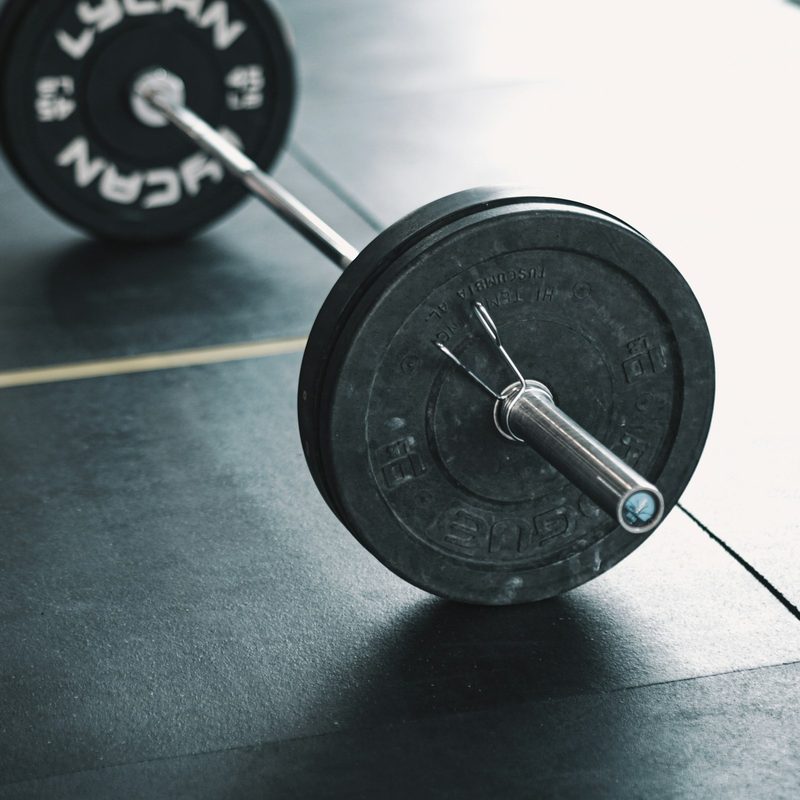
| A full power rack and barbell | Costs more than everything else combined and needs space and a strong floor | Adjustable dumbbells and single-leg work |
| Cardio machines | Expensive, bulky, and quickly a clothes rack | Walking, running, skipping rope, band circuits |
| Vibrating plates and 'toning' gadgets | Little evidence they build muscle or strength | Anything on the tier-one list |
| A cable machine | Great but pricey and space-hungry | A band anchored to a door or a heavy point |
The pattern is simple. Space and money go to the movements you will actually load hard, not to machines that do one thing or gadgets that do very little.
A buying plan on a real budget
Here is how to sequence purchases if money is tight, so every stage is a complete, trainable gym rather than a half-finished one.
- Month one: bands and a mat. Under 60 total. You can train your whole body from day one while you save for the big piece.
- Month two or three: adjustable dumbbells. The centrepiece. Buy the best pair your budget reaches. This is where most of your training will come from.
- Add a pull-up bar. Cheap, and it fixes the one thing dumbbells cannot, hard vertical pulling for your back.
- Later: an adjustable bench. Once dumbbell training is limited by the floor, a bench opens up incline pressing and better rows.
- Only if you want it: tier two extras. A kettlebell, a dip station, a vest. Each solves a specific need. None is required to build a strong body.
A serious, progress-driven home gym costs less than a year of most gym memberships, pays for itself, and never closes. Spend on the few things that let you train hard, and let your effort do the rest.
Questions people ask
What is the cheapest way to start a home gym?
Do I need a barbell and a rack to get strong at home?
Are resistance bands actually worth buying?
How much should I spend on adjustable dumbbells?
References
- Haugen ME, et al. BMC Sports Science, Medicine and Rehabilitation. Effect of free-weight vs. machine-based strength training on maximal strength, hypertrophy and jump performance: a systematic review and meta-analysis. 2023. doi.org/10.1186/s13102-023-00713-4
- Lopes JSS, et al. SAGE Open Medicine. Effects of training with elastic resistance versus conventional resistance on muscular strength: a systematic review and meta-analysis. 2019. doi.org/10.1177/2050312119831116
- Schoenfeld BJ, et al. Journal of Strength and Conditioning Research. Strength and Hypertrophy Adaptations Between Low- vs. High-Load Resistance Training: A Systematic Review and Meta-analysis. 2017. doi.org/10.1519/JSC.0000000000002200
Last reviewed 18 July 2026. We check health-condition articles against current guidelines and update the date above when we do.