KF.Social
 KF.Social Editorial
The honest answer is not a slogan in either direction. Home training can fully replace the gym for building muscle, general strength, fat loss and health, which covers what most people actually want. It falls short in a narrow band of goals that depend on very heavy external load. Knowing which camp you are in saves you both money and excuses.
The short version
- For building muscle, losing fat, and general health, a well-equipped home setup replaces the gym completely. The research does not favour the gym here.
- Muscle responds to effort and progression, not to the postcode of the equipment. Lighter loads taken close to failure grow muscle much like heavy ones.
- The gym keeps a real edge for maximal strength in the big barbell lifts and for people who need very heavy loading or specialised machines.
- Home training's true weakness is rarely the gear. It is consistency and progression, both of which are solvable with a plan.
- A hybrid is a valid answer too: train at home most days, use a gym occasionally for the few things it does better.
What home training covers completely
Start with the good news, because it is bigger than most people think. If your goal is to build muscle, get generally stronger, lose fat or improve your health, a home setup with bands, some adjustable load and a way to do pull-ups will get you there just as well as a commercial gym.
This is not motivational fluff. When training is matched for effort and volume, free weights and machines produce similar muscle growth, and lighter loads taken close to failure build muscle much like heavy loads do. That means the modest weights you can hold at home are not the ceiling people imagine. The muscle responds to how hard you work, not to what supplies the resistance.
| Goal | Can home training deliver it? | Notes |
|---|---|---|
| Build muscle | Yes, fully | Matched effort grows similar muscle regardless of tool. Light loads near failure work. |
| Lose fat | Yes, fully | Fat loss is mostly diet plus activity. No gym required. |
| General strength and health | Yes, fully | Bodyweight, bands and modest load cover every pattern for health. |
| Maximal barbell strength | Partly | Very heavy squats, deadlifts and presses eventually need a loaded barbell and rack. |
| Sport-specific heavy loading | Partly | Some athletes need loads and machines a home gym cannot supply. |
Where the gym still genuinely wins
Being honest about home training means being honest about its limits too. There is a real, if narrow, band of goals where a gym does something a home setup struggles to match.
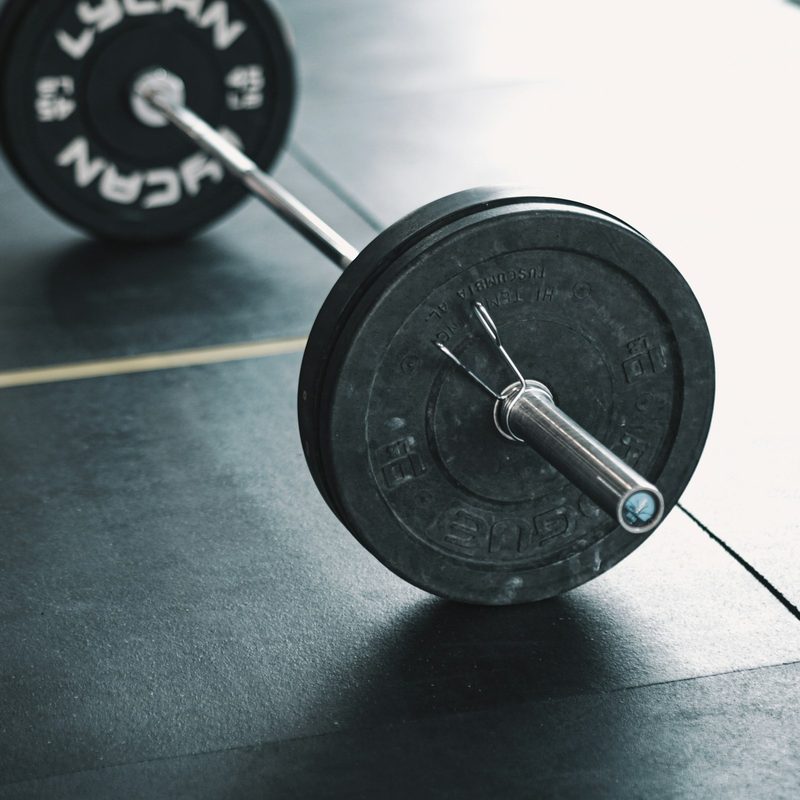
The clearest case is maximal strength in the big barbell lifts. If your aim is to squat, bench and deadlift as much as physically possible, you eventually need loads that only a barbell, plates and a rack can supply. Strength is partly a skill specific to the exact lift, so a powerlifter has good reason to train under a heavy bar. A trained lifter's legs, in particular, can outgrow what any pair of dumbbells can hold, which is why very heavy lower-body work is home training's honest weak spot.
Home training builds plenty of usable strength for daily life and health. What it struggles to maximise is the very top end of barbell strength, because that depends on heavy external load and lift-specific practice. For most people that ceiling is far higher than they will ever reach anyway.
The gym also offers variety, heavy machines, and a change of environment that some people simply train better in. That is a real benefit, just not a physiological one. It is about behaviour, not muscle.
Home training's real weakness is not the gear
Here is the part most gym-versus-home debates miss. The thing that actually decides whether home training works is almost never the equipment. It is two behaviours: showing up, and making the work progressively harder.
At home, no one is watching, there is no drive that commits you, and the same few tools can lull you into doing the same session forever. That is why home programmes stall. Not because bands cannot grow muscle, but because the same band, same reps, same effort, week after week, gives the muscle no reason to change.
- Fix consistency with a fixed schedule. Book your sessions like appointments. Removing the daily decision is worth more than any piece of kit.
- Fix progression by tracking. Write down sets and reps. If you are not beating your own numbers over time, you are not progressing, whatever the equipment.
- Keep enough variety to stay engaged. Rotate a handful of variations so boredom does not become the reason you quit.
Blaming the equipment for a plateau that is really about effort and progression. A cheap home setup used with a real plan beats an expensive gym membership you visit twice a month.
The verdict, and the hybrid option
So, can a home workout replace the gym entirely? For the goals most people hold, building muscle, losing fat, getting stronger and healthier, yes, completely, as long as you have a plan you progress. For chasing the very top of barbell strength or highly specialised loading, not fully.
You do not have to choose a side. A hybrid works well: train at home most of the week for convenience and consistency, and use a gym occasionally for the couple of things it does better, like heavy barbell work. The best setup is the one you will actually use, week in and week out.
Questions people ask
Can you get as muscular at home as in a gym?
What can a gym do that home training cannot?
Is home training worse for beginners?
Do I need heavy weights to make home training work?
References
- Haugen ME, et al. BMC Sports Science, Medicine and Rehabilitation. Effect of free-weight vs. machine-based strength training on maximal strength, hypertrophy and jump performance: a systematic review and meta-analysis. 2023. doi.org/10.1186/s13102-023-00713-4
- Schoenfeld BJ, et al. Journal of Strength and Conditioning Research. Strength and Hypertrophy Adaptations Between Low- vs. High-Load Resistance Training: A Systematic Review and Meta-analysis. 2017. doi.org/10.1519/JSC.0000000000002200
- Lopes JSS, et al. SAGE Open Medicine. Effects of training with elastic resistance versus conventional resistance on muscular strength: A systematic review and meta-analysis. 2019. doi.org/10.1177/2050312119831116
Last reviewed 18 July 2026. We check health-condition articles against current guidelines and update the date above when we do.